"Is a slatmill safe for my dog?"
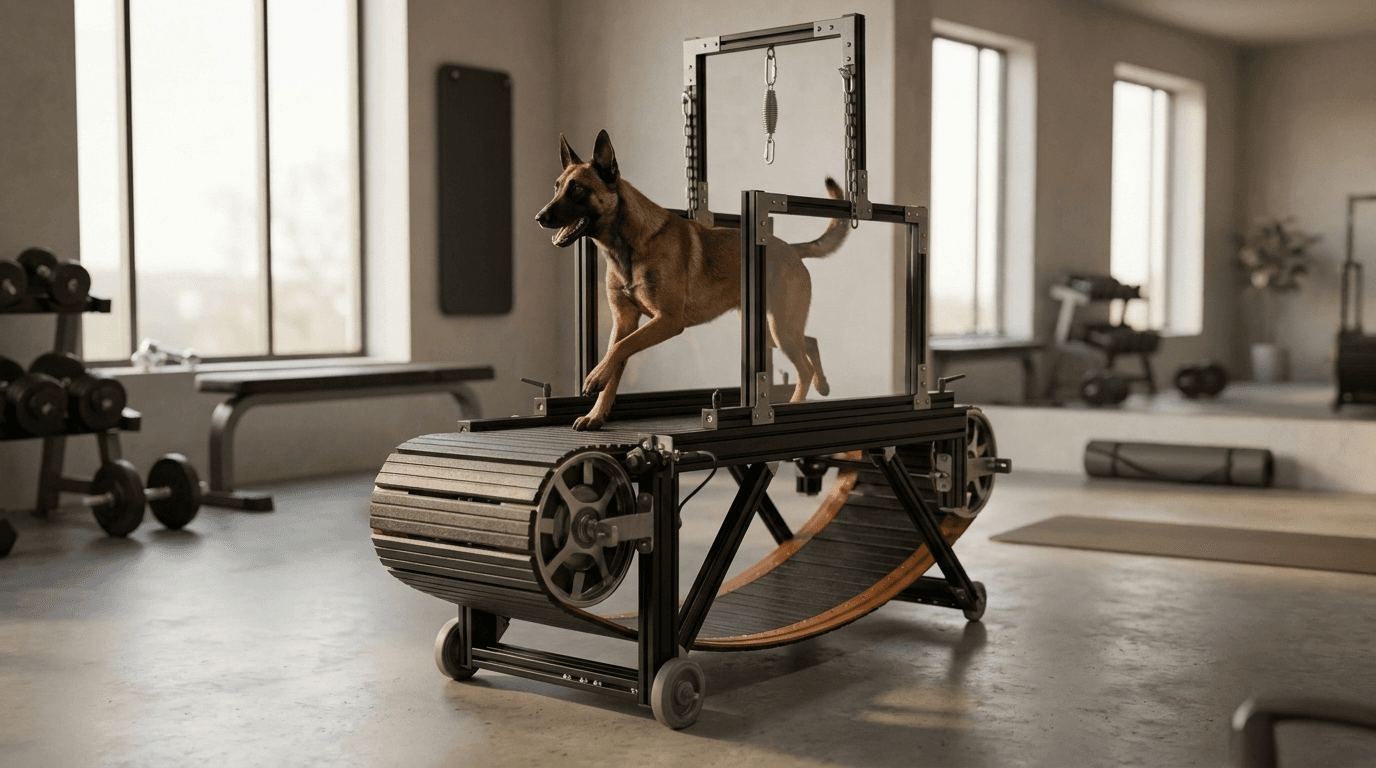
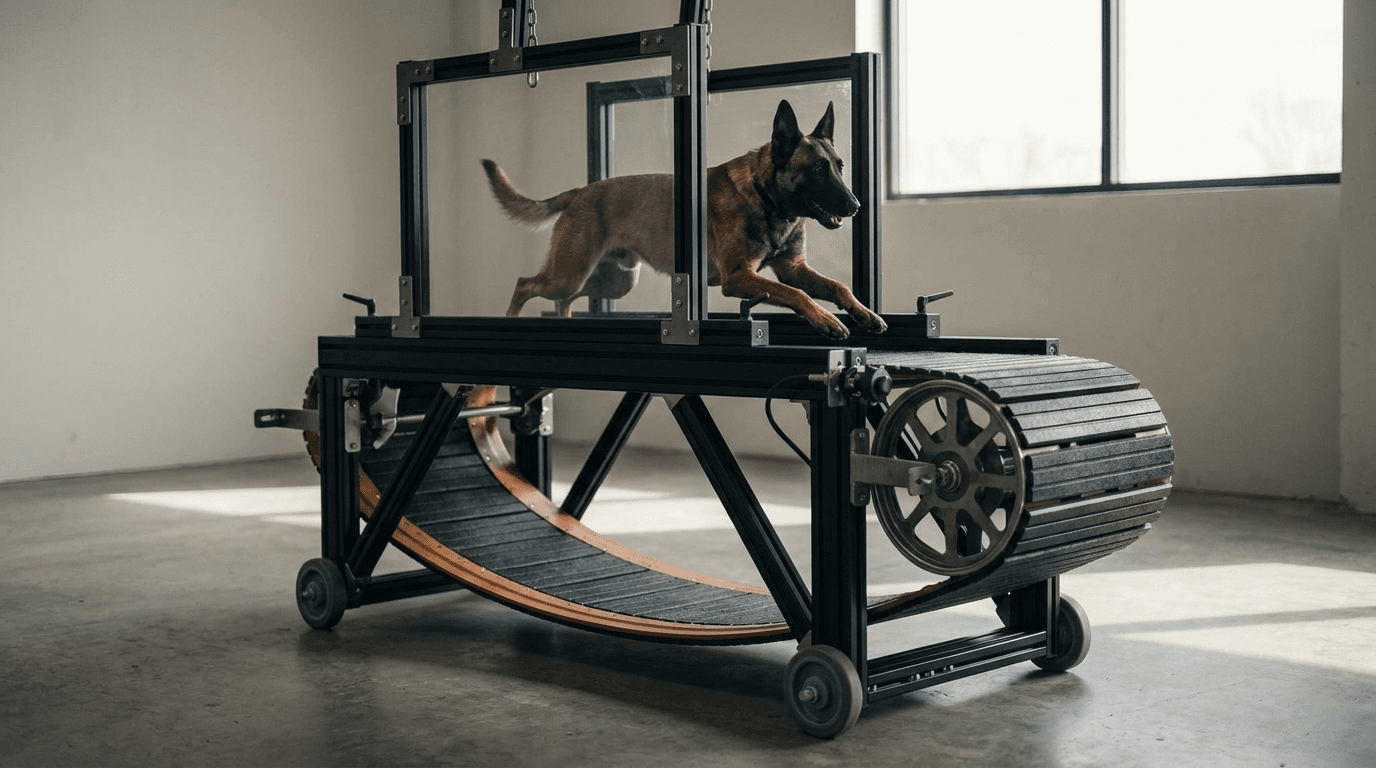
It's the first question every owner asks, and the answer is yes — with important caveats. A slatmill is inherently safer than a motorized treadmill because the dog controls the pace entirely. If they stop moving, the belt stops. There's zero risk of being dragged by a motor.
But "safer than motorized" doesn't mean "no rules." Here's what you need to know.
The Fundamental Safety Advantage
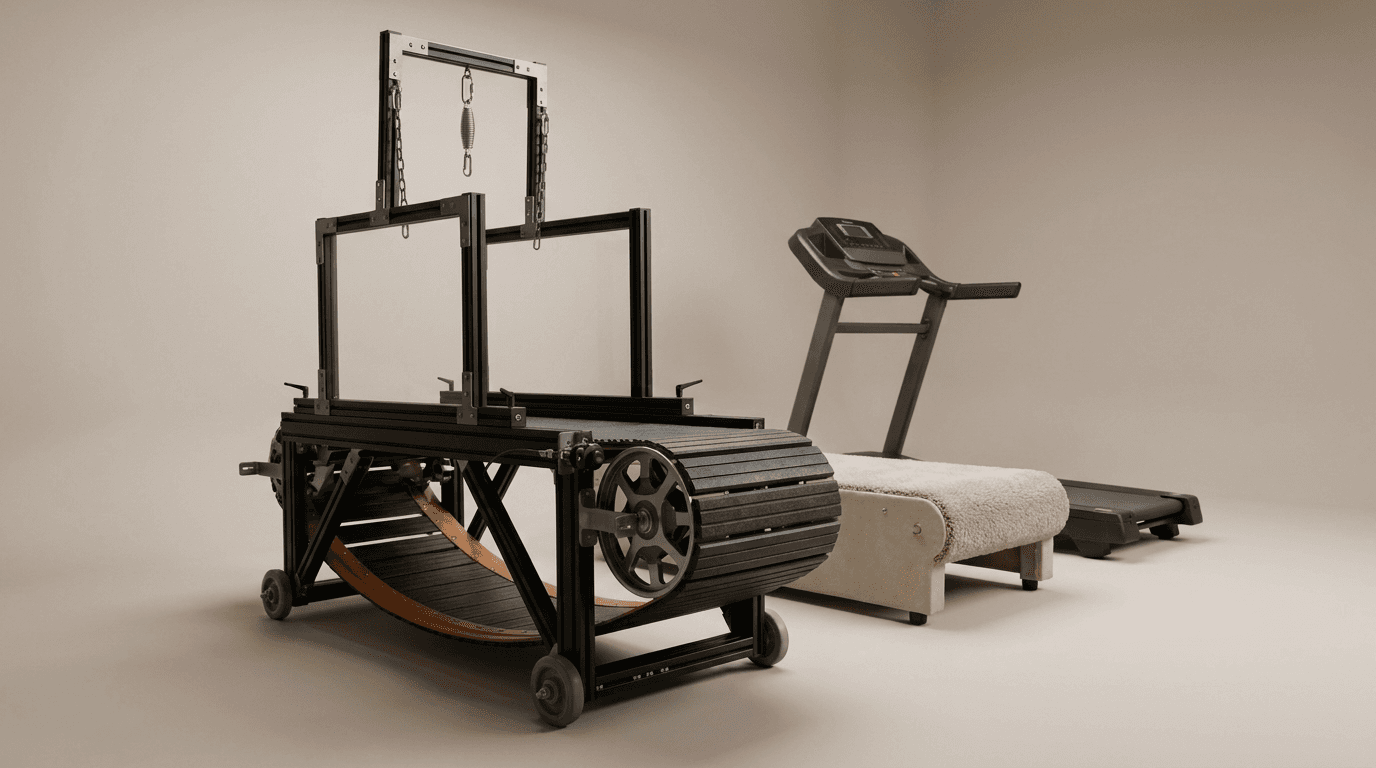
On a motorized treadmill, the motor sets the pace. If your dog stumbles, slows down, or panics, the belt keeps moving. This is how injuries happen.
On a slatmill, the belt only moves when the dog moves. The dog accelerates, decelerates, and stops entirely on their own terms. It's the same as running on flat ground — just indoors.
Age Restrictions: Growth Plates Matter
This is non-negotiable. Puppies' growth plates (the soft areas at the ends of bones) haven't closed yet. Repetitive running on any surface — including a slatmill — can cause lasting joint damage.
When growth plates close:Puppies over 6 months can do short, supervised familiarization sessions (standing on the mill, taking a few steps) — but no real workouts.
Always a Harness, Never a Collar
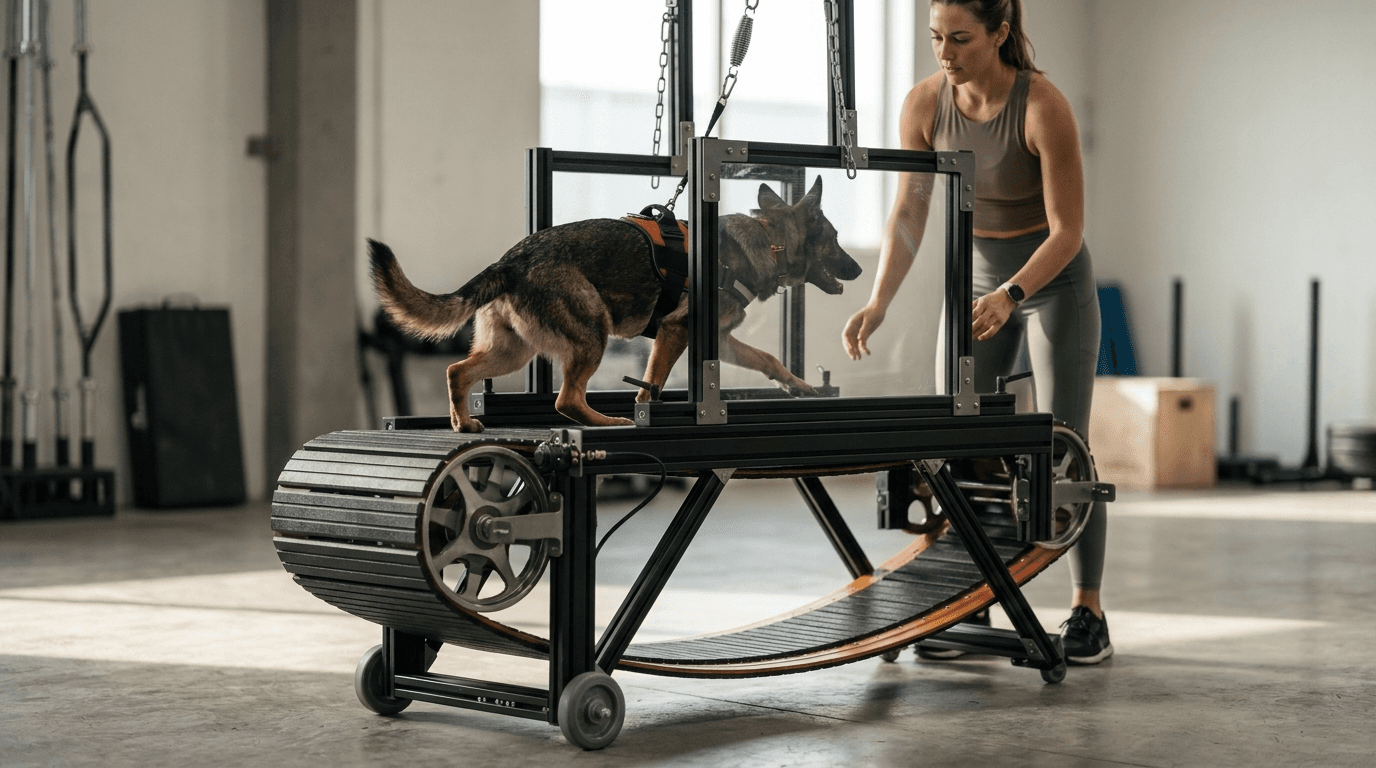
This is universal across every slatmill manufacturer, veterinarian, and trainer. A harness distributes force across the chest and allows natural movement. A collar puts pressure directly on the neck and trachea, which is dangerous during exertion.
Use a well-fitted, non-restrictive harness every single time.
Overheating: The Hidden Risk
Even in air-conditioned spaces, a full sprint can raise body temperature to dangerous levels. Dogs cool primarily through panting, not sweating, which makes them less efficient at heat regulation than humans.
Prevention:Signs of Overexertion
Some dogs — especially high-drive breeds like Malinois and Pit Bulls — love running so much they won't self-regulate. The owner must enforce limits.
Stop the session if you see:Dogs hide pain. Subtle gait changes in the first few minutes are often the earliest signal that something is wrong.
Supervision: Non-Negotiable
Never leave a dog unattended on a slatmill. Period. Even though the dog controls the speed:
Cornell University's College of Veterinary Medicine recommends one or two people present during every session.
Breed-Specific Cautions
Brachycephalic breeds (English Bulldog, French Bulldog, Pug, Boston Terrier): Compromised airways make sustained cardio genuinely dangerous. Limit to 5-10 minutes maximum with extra airflow. Vet clearance required. Giant breeds (Great Dane, Saint Bernard, Newfoundland): Walk-only pace. Excess weight on joints is a concern, especially with arthritis. Senior dogs: Gentle sessions under veterinary guidance. Walking pace, 5-10 minutes.9 Common Beginner Mistakes
1. Rushing the introduction (the #1 mistake)
2. Using a collar instead of a harness
3. Sessions too long, too soon
4. No warm-up or cool-down
5. Ignoring stress signals (panting, tail tucking, resisting)
6. Leaving the dog unsupervised
7. Not trimming nails (risk of catching in slats)
8. Poor equipment maintenance (wobbly frame, draggy belt)
9. Using a human treadmill (78% of dog treadmill injuries occur on modified human equipment)
What Veterinarians Recommend
Cornell University supports treadmill training with proper protocols. General vet recommendations:
The Bottom Line
A slatmill is one of the safest ways to exercise your dog — safer than running on concrete, safer than motorized treadmills, and completely within your dog's control. Follow the rules above, and you'll have a training tool that keeps your dog fit for years.
See HoundPower Slatmills — built with upgraded suspension for joint safety →