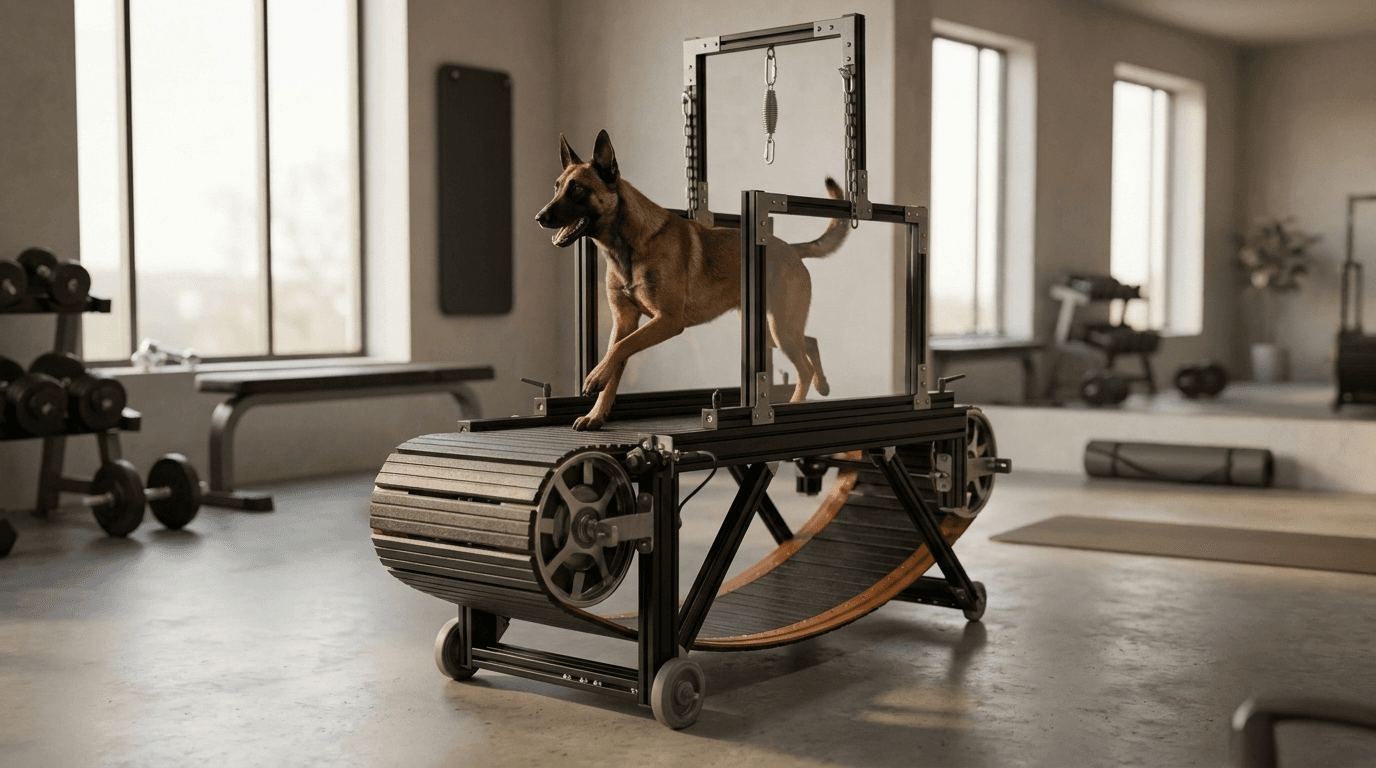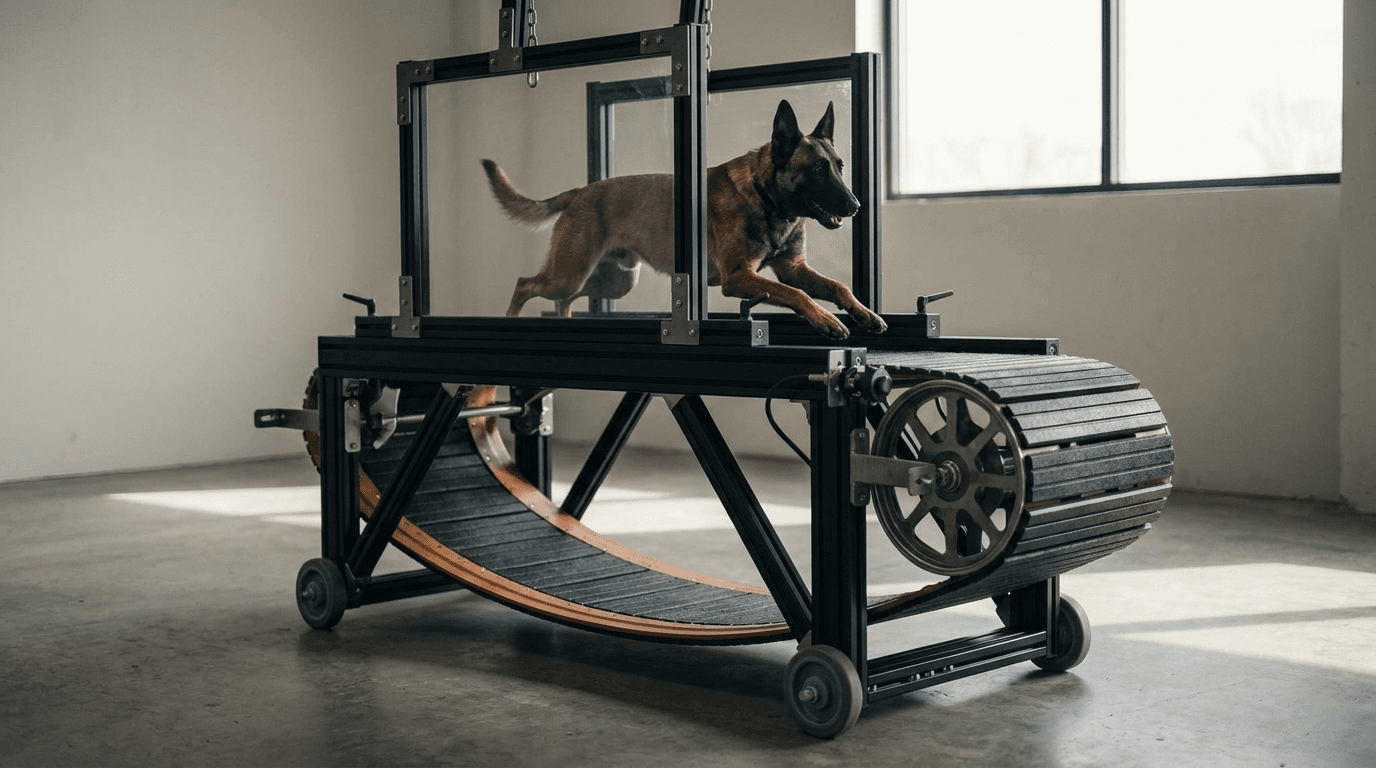
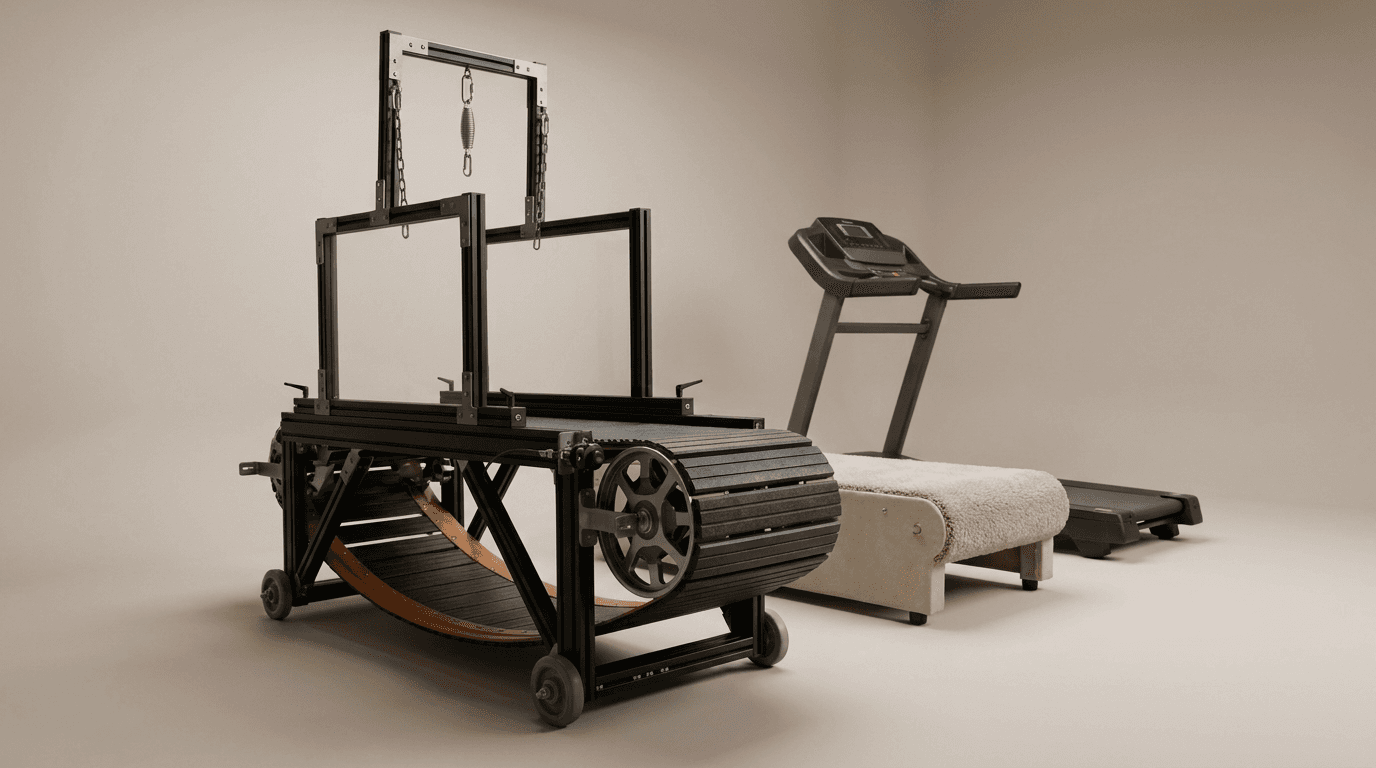
If you're shopping for a dog treadmill, you've probably noticed there are three types: slatmills, carpet mills, and electric treadmills. They all look similar, but they work very differently — and the right choice depends on your dog, your goals, and your space.
Here's the honest comparison.
How Each One Works
Slatmill: Dog-powered. Hard plastic, wood, or aluminum slats rotate on rollers like a conveyor belt. Nearly frictionless — the dog sets their own pace from walk to full sprint. No motor, no electricity. Carpet mill: Also dog-powered. A loop of carpet material wraps around rollers. The carpet surface creates 4-5x more resistance than a slatmill, simulating uphill running. No motor. Electric treadmill: Motor-driven belt moves at a speed set by the owner. Some models include preset workout programs with variable pacing.The Key Difference
On a slatmill or carpet mill, your dog controls the speed. On an electric treadmill, you do.
This matters for safety. If your dog stumbles or wants to stop on a motorized treadmill, the belt keeps moving. On a slatmill or carpet mill, the belt stops when the dog stops.
Side-by-Side Comparison
Safety: Slatmill and carpet mill are inherently safer — dog stops, belt stops. Electric treadmills require constant supervision and an emergency stop mechanism. Best for endurance/cardio: Slatmill. Low resistance means the dog can sustain longer runs and reach higher speeds. Best for muscle building: Carpet mill. High resistance acts like resistance training, building raw strength and power. Best for rehab/seniors/low-drive dogs: Electric treadmill. Owner-controlled pacing is ideal when the dog needs to be kept at a slow, consistent speed. Noise: Electric is quietest. Carpet mill is moderate. Slatmill is loudest at full sprint (slats clacking on rollers). Maintenance: Slatmill is lowest — no motor, just occasional bolt tightening and cleaning. Carpet mills need periodic carpet surface replacement. Electric needs belt lubrication and motor upkeep. Space: Slatmills are the largest (typically 77"+ long, 100+ lbs, not foldable). Many carpet mills fold flat for storage. Electric treadmills have the most compact options.Price Ranges
Slatmills are the most expensive upfront, but they have the lowest ongoing costs (no electricity, no motor to replace, no carpet to swap out) and the longest lifespan.
Which Is Right for Your Dog?
Get a slatmill if: Your dog is high-energy, high-drive, or athletic. You want a versatile machine that handles walking, jogging, and sprinting. You want the safest option. You're willing to invest in a machine that lasts 10+ years. Get a carpet mill if: Your primary goal is building muscle and power (not endurance). Your dog does weight pull, protection sport, or you want maximum resistance. You need something that folds for storage. Get an electric treadmill if: Your dog is low-drive, senior, or in rehab. You need to control the pace precisely. You want the quietest and most compact option.Can You Use More Than One?
Yes — and many serious trainers do. Slatmill 3x per week for endurance, carpet mill 1-2x per week for strength. It's the same logic as alternating cardio and resistance training in human fitness.
The Bottom Line
A slatmill is the safest, most versatile, and longest-lasting option for most dogs — especially high-energy breeds. If you're only buying one piece of equipment, a slatmill is the one.
See the HoundPower Slatmill lineup →