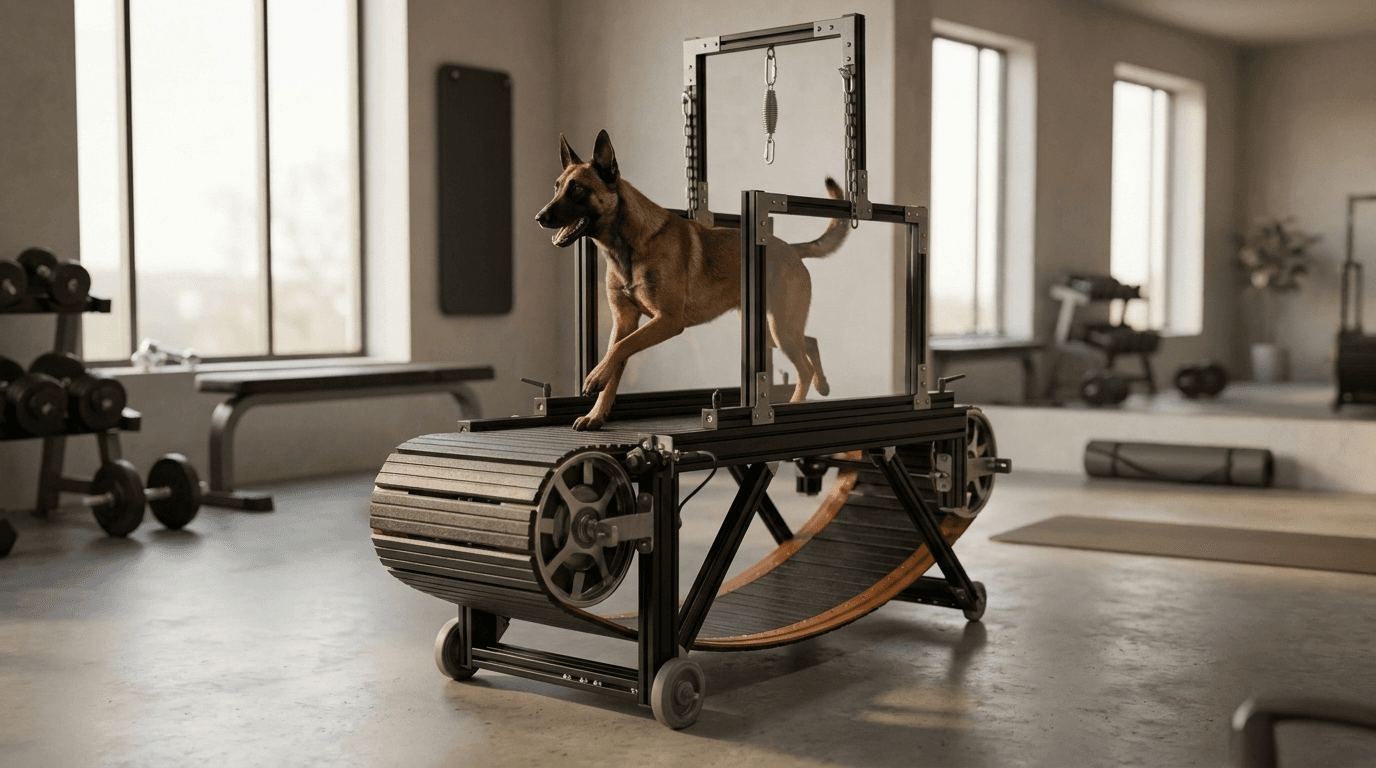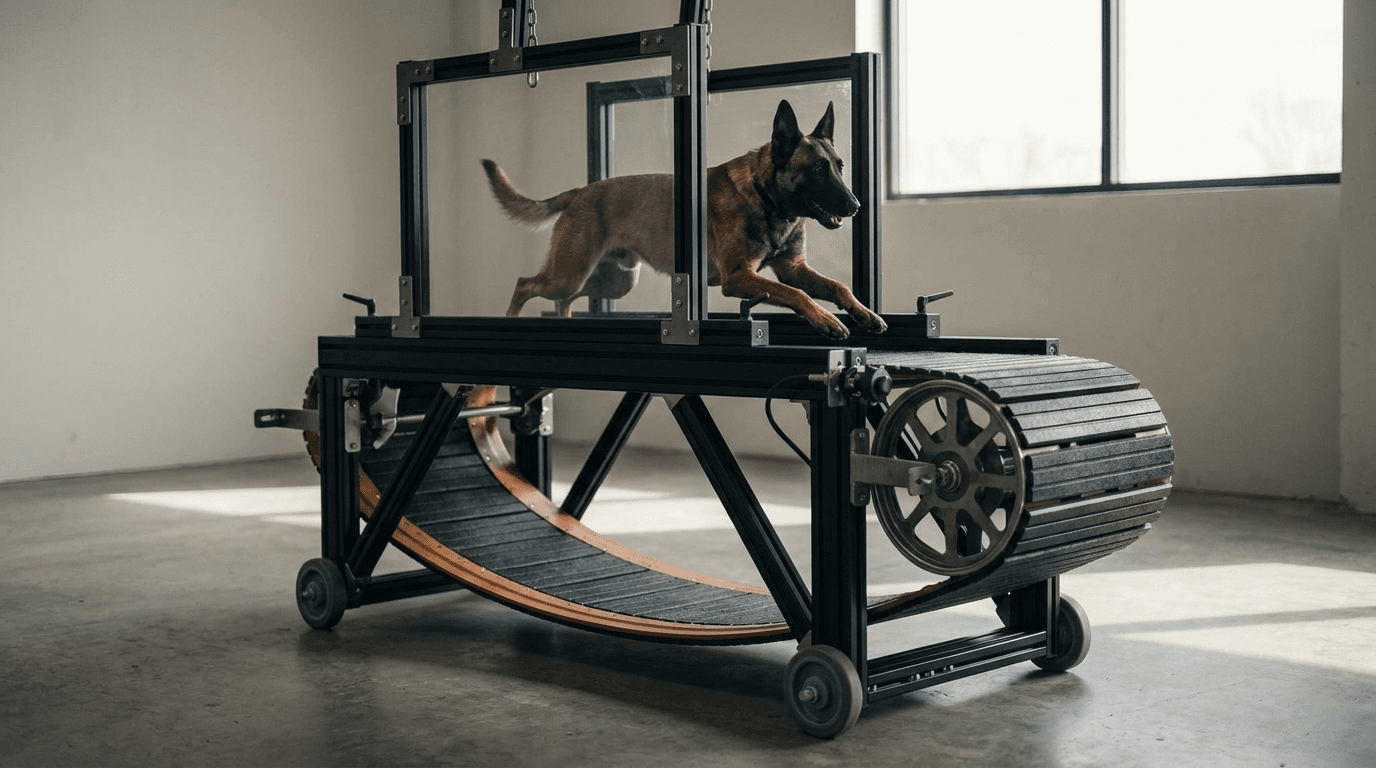
Most slatmill content features Pit Bulls, Malinois, and German Shepherds. But some of the highest-energy dogs on the planet weigh under 40 lbs — and they need intense exercise just as badly.
Jack Russell Terriers. Miniature Pinschers. Rat Terriers. Border Collies (not huge dogs). Australian Cattle Dogs. Shetland Sheepdogs. These breeds have energy levels that rival any large breed, packed into a smaller body.
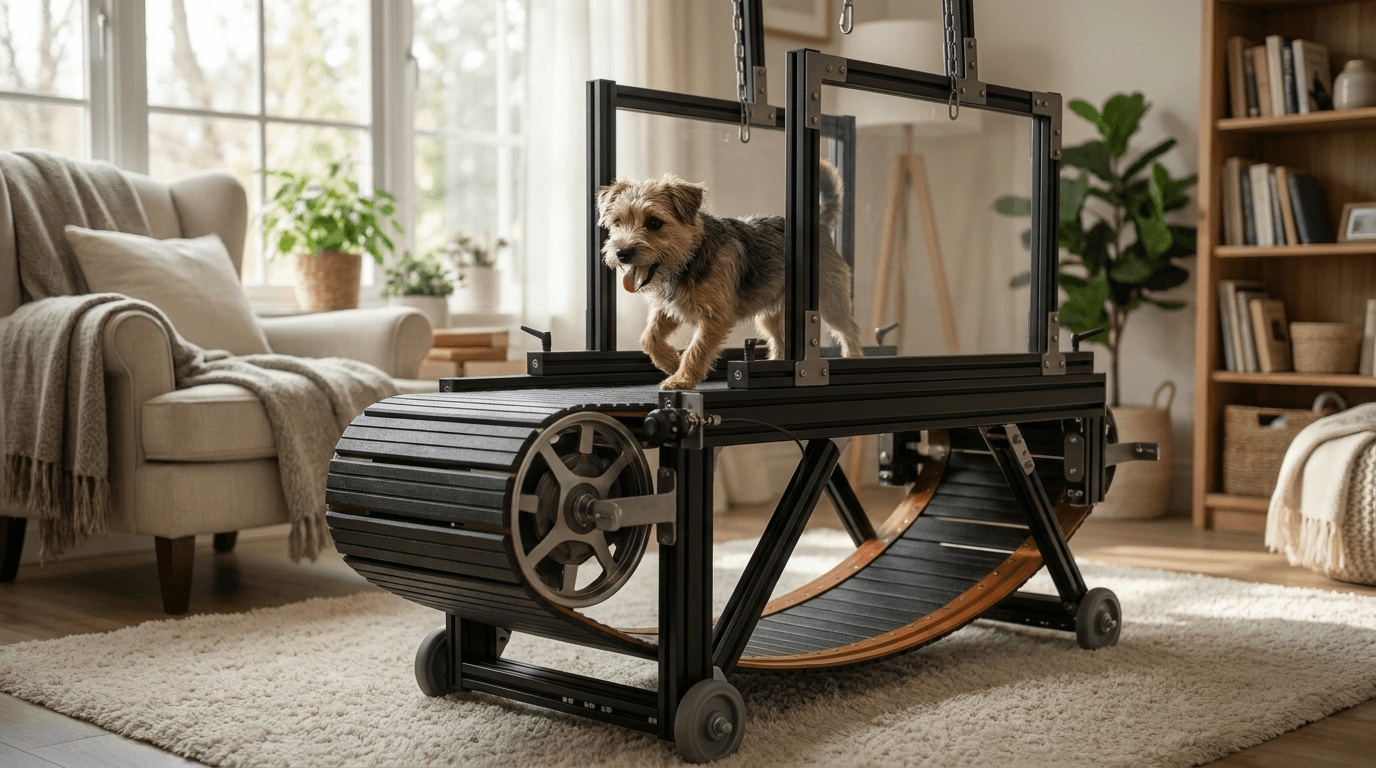
Can Small Dogs Use a Slatmill?
Yes. The key considerations:Belt Size
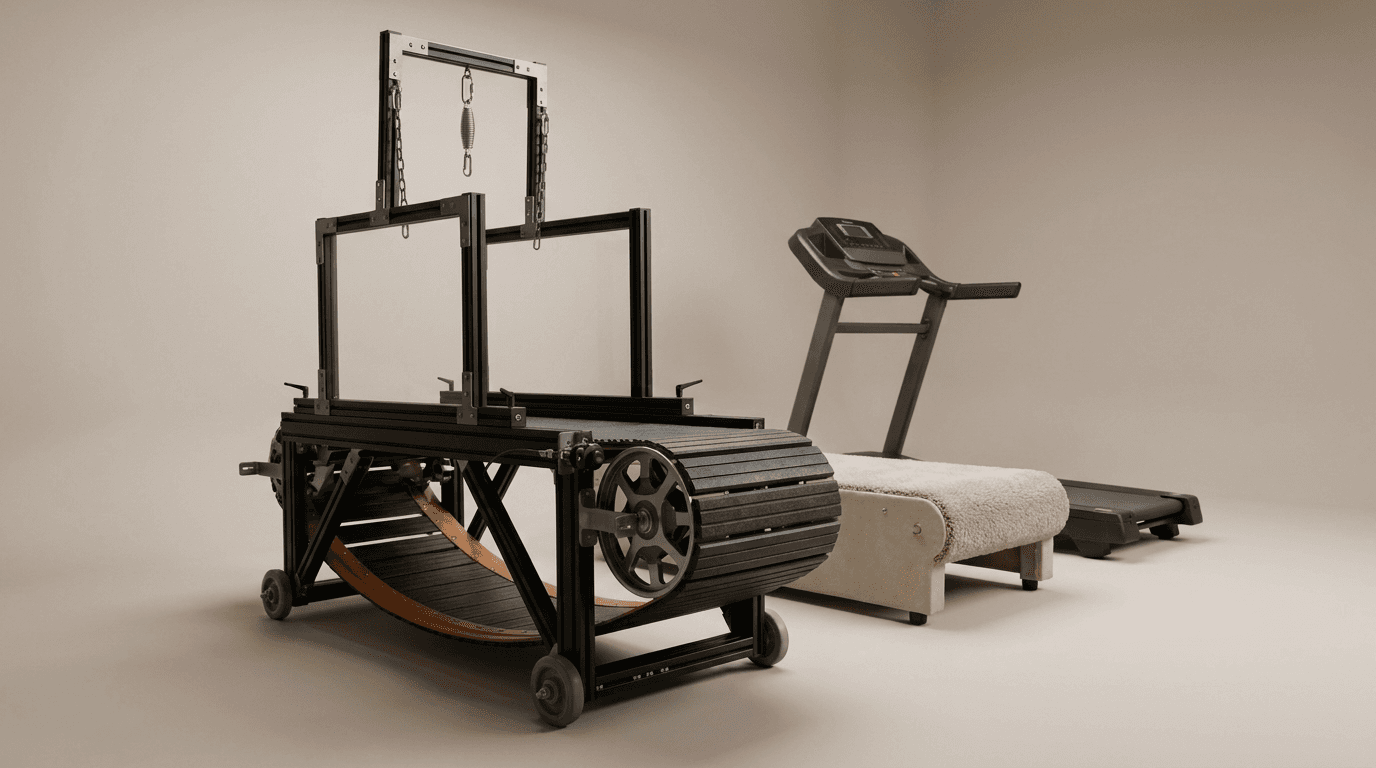
A small dog needs a belt that matches their stride length. A medium slatmill (62" belt length, 15.5" width) works for most small-to-medium breeds. You don't need a 76" large-model belt for a 25 lb dog — they'll use the center and never reach the edges.
Step-Up Height
Small dogs need to mount and dismount easily. Check that the step-up height isn't too tall for your dog. Some owners place a small ramp or step stool next to the mill.
Belt Resistance
Smaller dogs weigh less, which means they generate less force to drive the belt. Make sure the slatmill belt moves freely enough that a lighter dog can turn it without struggling. Spin the belt by hand — if it requires significant force, it may be too heavy for a small dog.
Best Small Breeds for Slatmill Training
These small-to-medium breeds have the drive and energy to benefit most:
Introduction Protocol for Small Dogs
Same principles as large dogs, but slower and gentler:
1. Familiarization: Let them explore the slatmill at floor level. Small dogs can be more cautious about unfamiliar objects. Extra patience here.
2. First steps: Use high-value treats to lure them onto the belt. 1-2 minutes walking maximum.
3. Build gradually: Add 1 minute per session. Small dogs tire faster but also recover faster.
4. Session length: 5-15 minutes is typically enough for small breeds. They don't need 30-minute sessions.
Common Concerns
"Won't they get scared?" Small dogs are sometimes more cautious, but they also learn fast. A positive, treat-heavy introduction works for any size dog. "Is the belt too heavy for them?" On a well-maintained slatmill with quality bearings, no. The belt should move with minimal force. If your small dog struggles to move the belt, the bearings may need maintenance. "Do they really need this much exercise?" Yes. Small breed owners consistently underestimate their dog's exercise needs because "they're small, how much energy can they have?" The answer: a lot. Jack Russell Terriers have more energy per pound than most large breeds.The Bottom Line
A slatmill isn't just for big dogs. Any breed with high energy and working drive benefits — and many small breeds have more drive per pound than their larger counterparts. Choose a medium-size slatmill, introduce gradually, and watch your "small" dog become a calmer, happier version of themselves.
See HoundPower Slatmill Medium — built for medium and smaller breeds →