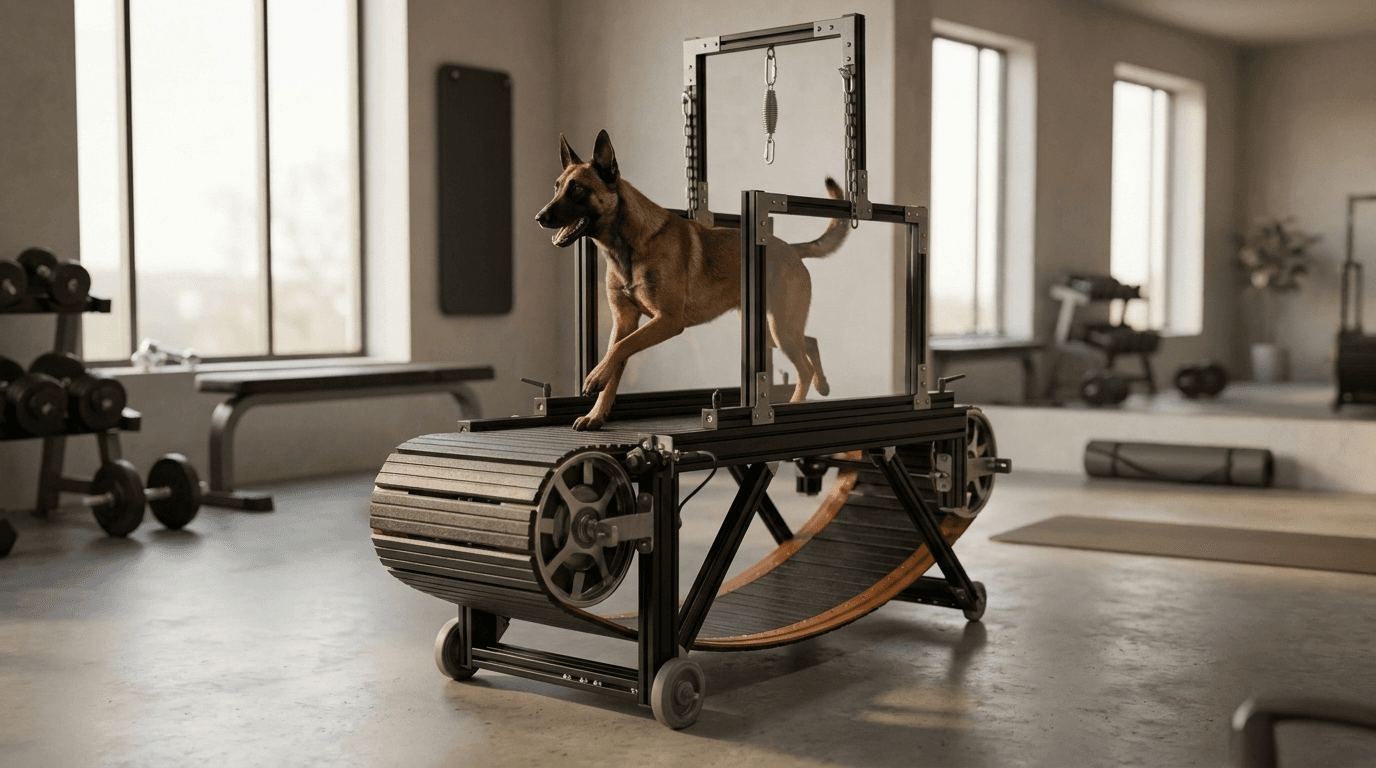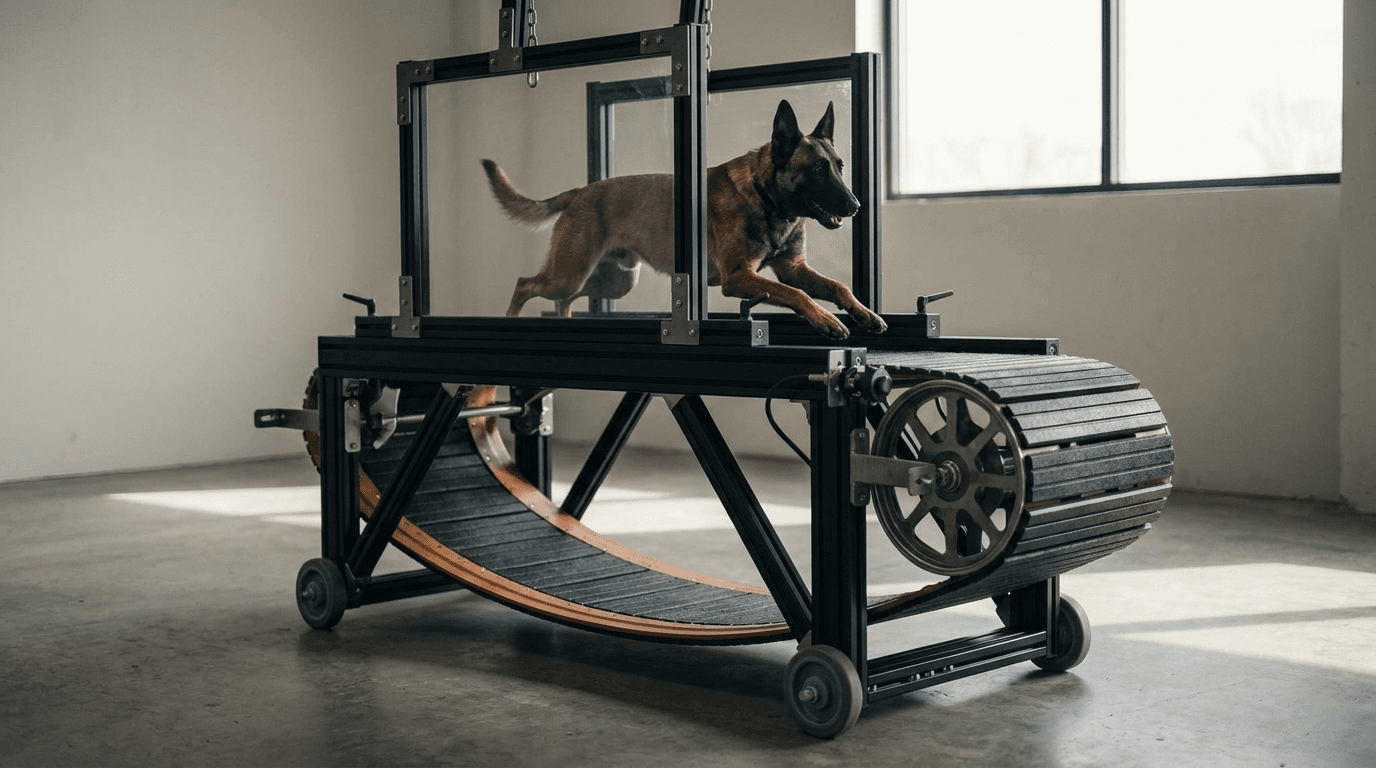
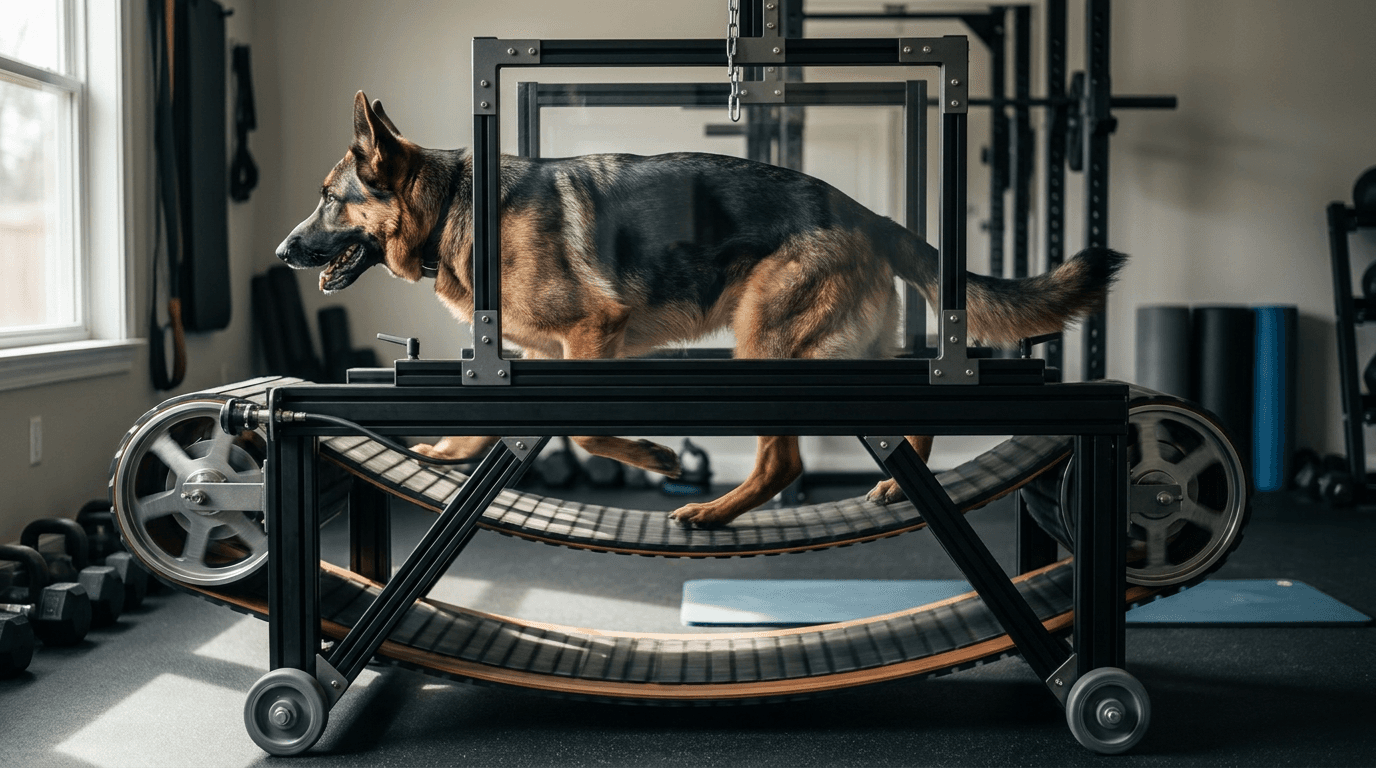
German Shepherds are working dogs. They were bred to herd, patrol, and protect — for hours. When that drive doesn't have an outlet, it turns into barking, chewing, pacing, and anxiety.
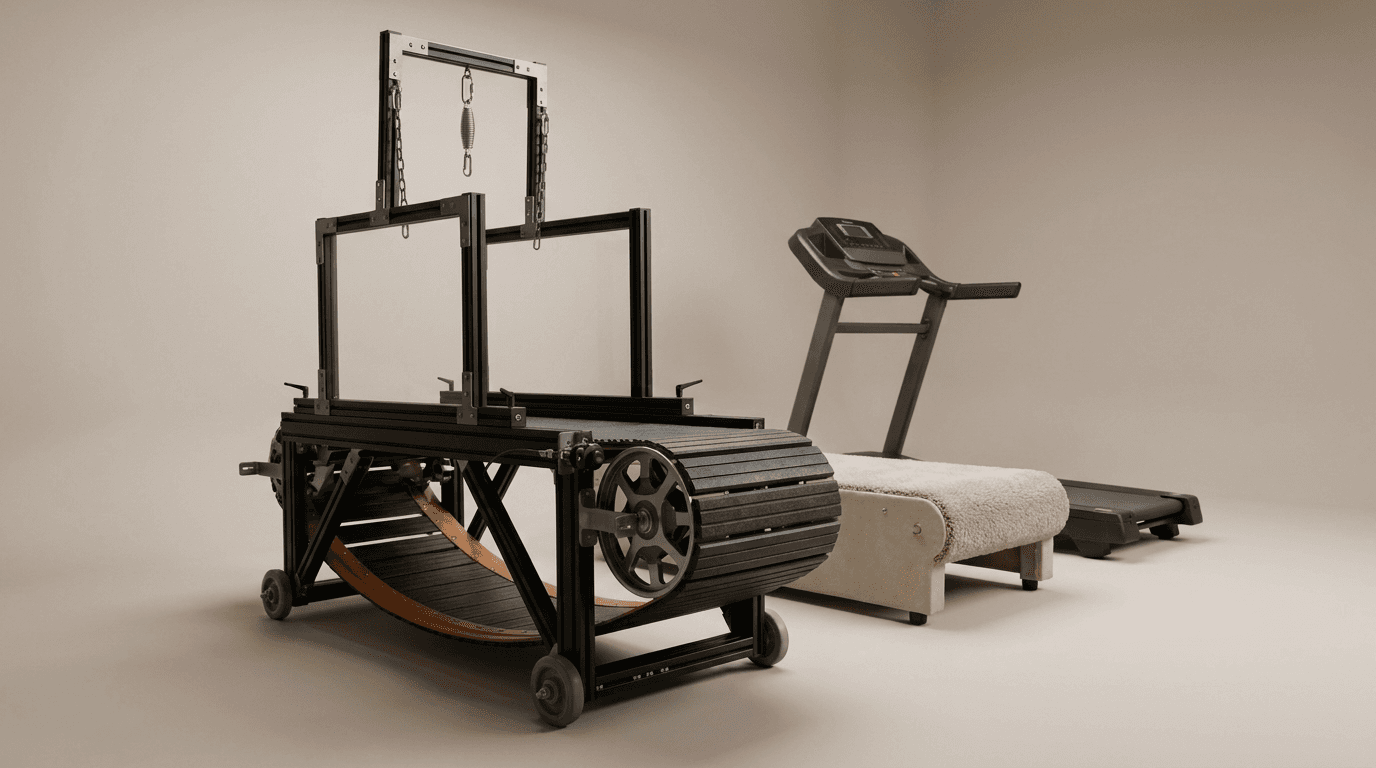
A slatmill gives your GSD the structured, intense exercise their genetics demand.
Why GSDs Need a Slatmill
Exercise requirements: 90-120 minutes of daily exercise. Not gentle walking — real physical work. Most owners can't deliver this consistently, especially in bad weather or with busy schedules. Hip health: GSDs are prone to hip dysplasia. Running on concrete accelerates joint wear. A slatmill's shock-absorbing slat surface reduces impact significantly — your GSD gets the workout without the joint damage. Mental engagement: A slatmill isn't passive. Your GSD controls the pace, makes decisions about speed, and focuses on the running rhythm. This engages their brain in a way that a motorized treadmill doesn't. Year-round consistency: Whether you're in Alberta in January or Ontario in July, your GSD gets the same quality workout every day.Sizing for German Shepherds
GSDs need a large-size slatmill. The minimum recommended belt length is 71" plus 10" added to your dog's full stride for safety. A 76" belt (like the HoundPower Pro Large) gives a full-size GSD plenty of room.
Belt width matters too — at least 16" for a GSD's shoulder width.
Training Protocol for GSDs
Week 1-2: IntroductionLet your GSD explore the slatmill with it stationary. Use high-value treats. First movement sessions: 2-3 minutes walking pace only. GSDs are intelligent — most figure it out quickly.
Week 3-4: Building DurationIncrease to 10-15 minute sessions mixing walking and light trotting. 3 sessions per week. Always warm up and cool down.
Week 5-8: ConditioningBuild to 20-30 minute sessions with interval work — 3 minutes trotting, 1 minute walking, repeat. Add sprint intervals for advanced conditioning.
Maintenance:3-4 sessions per week, 20-30 minutes each. One interval session, two steady-state sessions.
GSD-Specific Tips
What GSD Owners Say
The German Shepherd community is one of the most active slatmill user groups. GSD forums consistently report:
The Bottom Line
A German Shepherd without adequate exercise is a German Shepherd with problems. A slatmill delivers the intensity, consistency, and joint safety that this breed specifically needs.
See the HoundPower Pro Large — built for large breeds like GSDs →