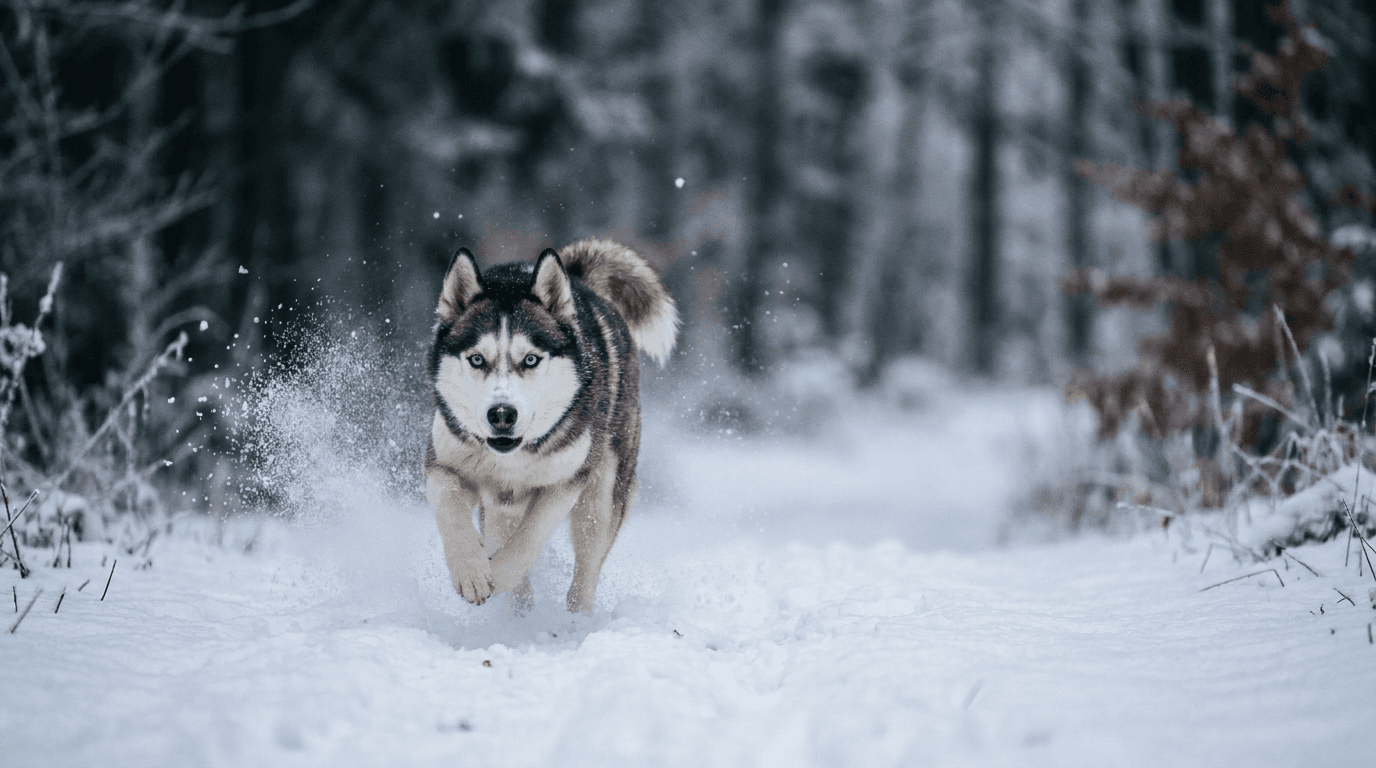
Siberian Huskies were bred by the Chukchi people of northeastern Siberia to pull sleds over vast frozen distances — for hours, in extreme conditions. That breeding created one of the highest-energy dog breeds on the planet.
If you own a Husky, you already know: they never stop.
How Much Exercise Does a Husky Need?
Adult Huskies: minimum 2 hours of vigorous exercise daily.That's not a typo. Two hours. And "vigorous" doesn't mean a leisurely walk — it means running, sprinting, pulling, or sustained trotting at working pace.
By Age:
What Happens When Huskies Don't Get Enough
Huskies are escape artists by nature. An under-exercised Husky will:
The Best Exercises for Huskies
1. Slatmill Training
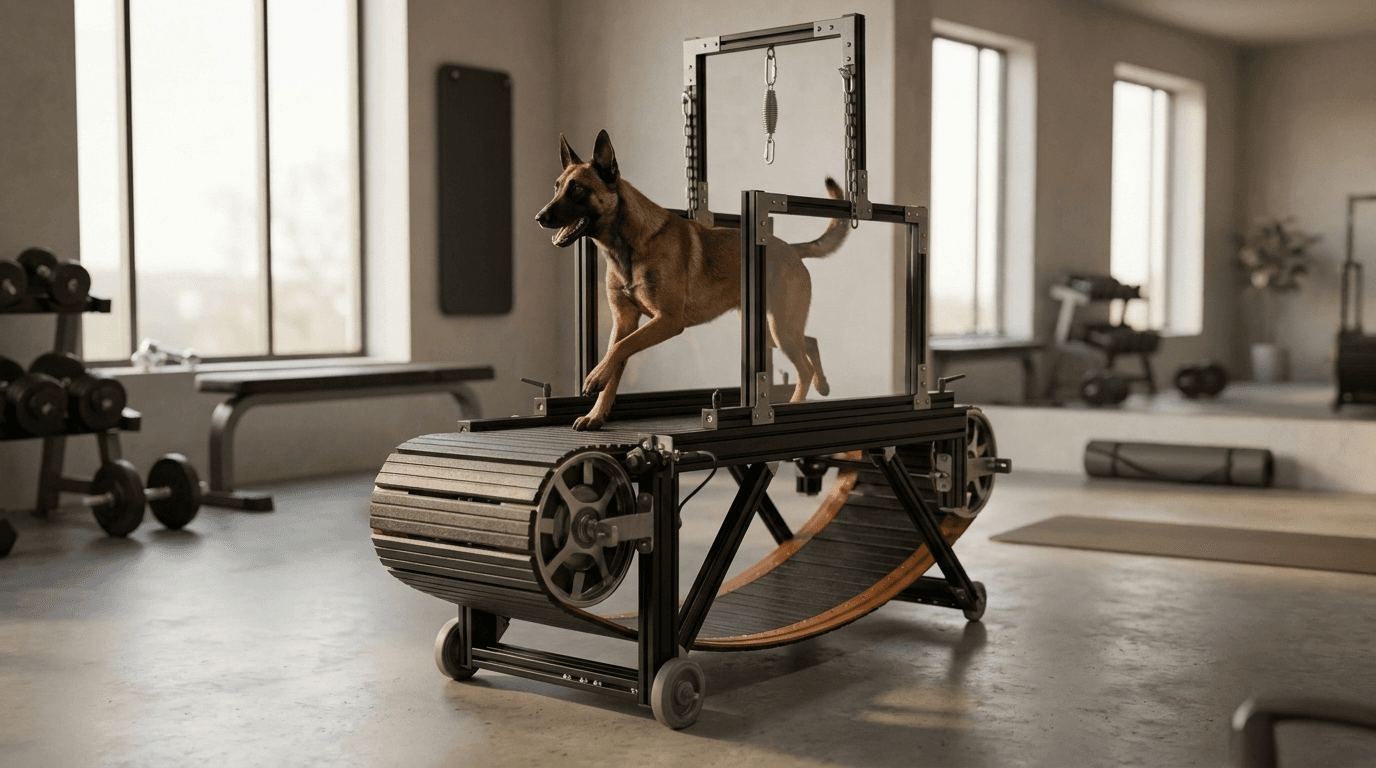
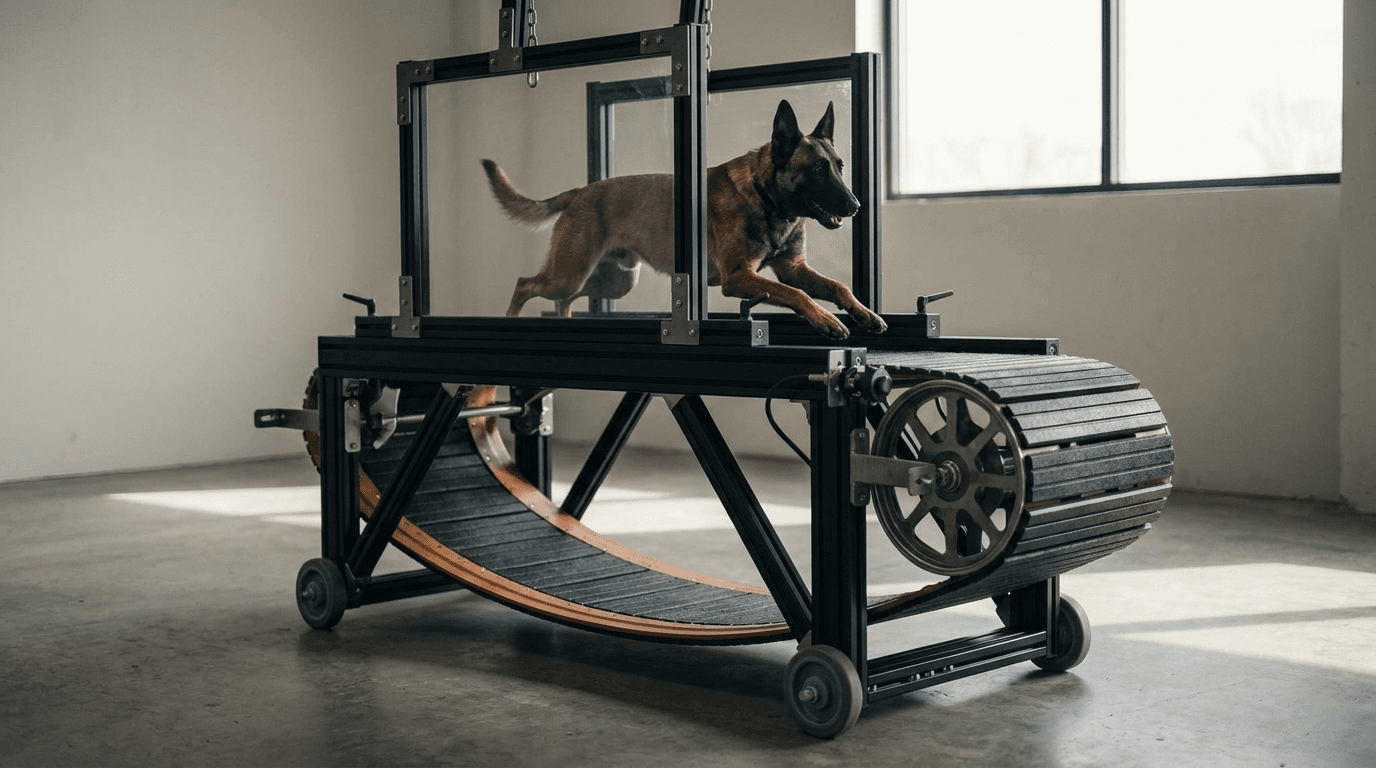
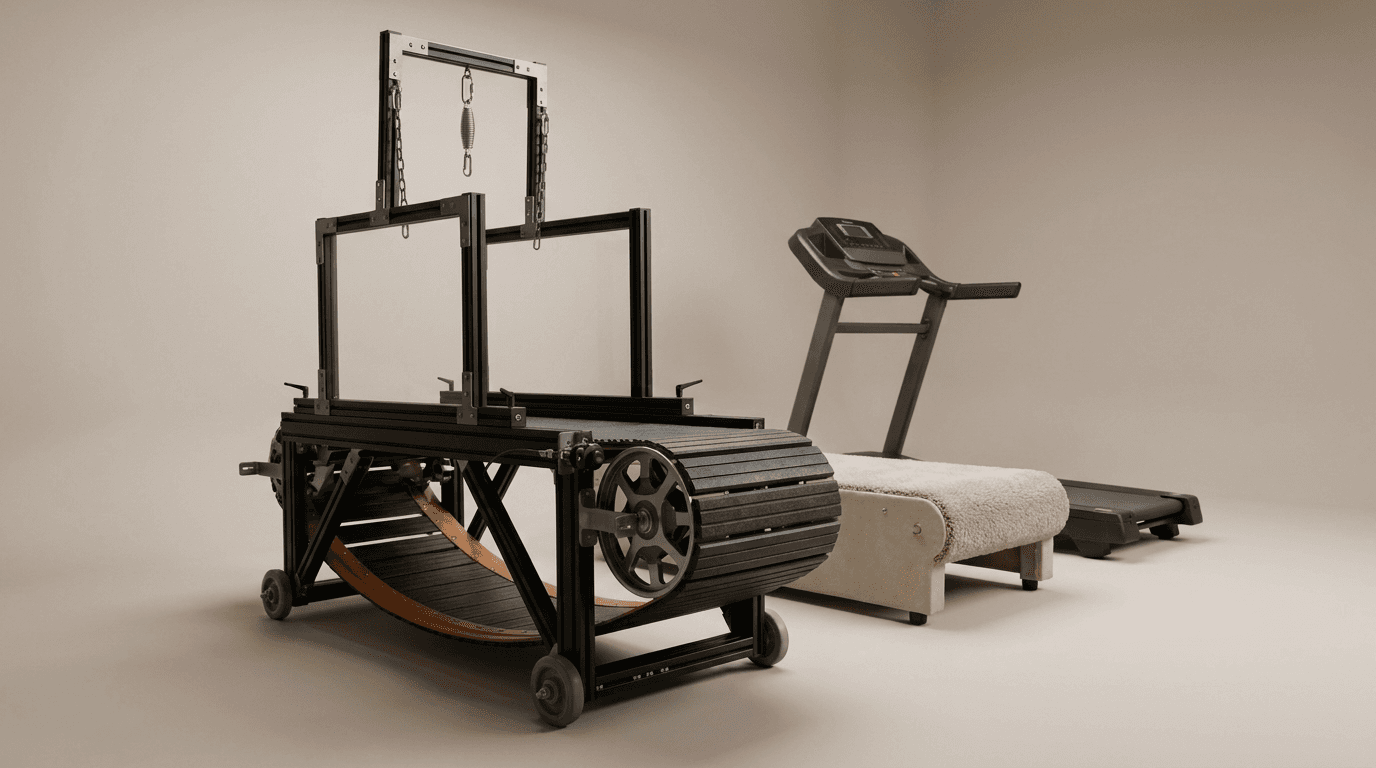
The closest indoor equivalent to what Huskies were bred to do: sustained trotting at a working pace. A Husky on a slatmill will find their natural rhythm and run at endurance pace — exactly the movement pattern their body is built for. 20-30 minute sessions.
Critical for warm climates: Huskies have a double coat designed for -40°C. They overheat easily in temperatures above 20°C. A slatmill lets them run in air-conditioned comfort.2. Canicross / Bikejoring
Running with your Husky while they pull you (on foot or bike). Mimics sled pulling. Requires proper harness and training.
3. Long-Distance Running
If you're a runner, a Husky is the perfect running partner. They can sustain 10-20km runs at moderate pace. But only in cool weather.
4. Swimming
Not all Huskies are natural swimmers, but those that learn love it. Full-body workout without overheating.
5. Flirt Pole
Short, intense prey-drive bursts. Good for days when you can't do a full 2-hour session.
6. Puzzle Feeders and Scent Work
Huskies are intelligent. Mental stimulation tires them almost as much as running. Use puzzle feeders, hide treats, teach new tricks.
The Husky Exercise Calendar
Hot Climate Huskies
If you live somewhere warm, exercise management is critical:
Can You Over-Exercise a Husky?
It's possible but rare. A healthy adult Husky will self-regulate on a slatmill — they'll slow down and stop when they've had enough. The bigger risk is under-exercise by a wide margin.
That said: always include rest days (1-2 per week), watch for signs of overtraining (stiffness, reluctance, decreased appetite), and adjust for age and health conditions.
The Bottom Line
Huskies need more exercise than almost any other breed. If you can't commit to 2 hours daily of real physical activity, a Husky may not be the right breed for you. If you already have one — a slatmill is the most practical tool to meet their needs, year-round, regardless of weather.
See HoundPower Slatmills — built for breeds that never stop →