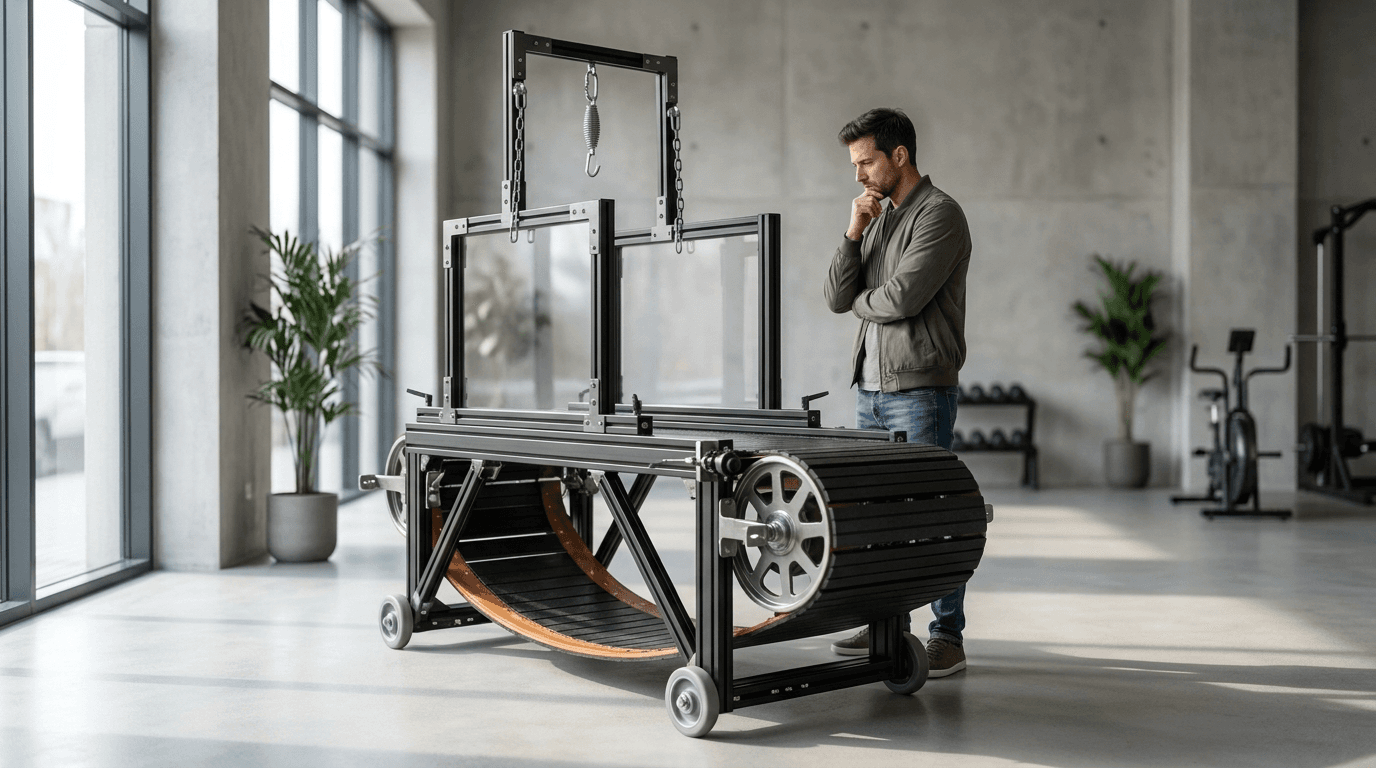
You've decided your dog needs a treadmill. Now you need to choose one. There are three types, dozens of brands, and a wide price range. Here's how to make the right decision.
Step 1: Choose the Type
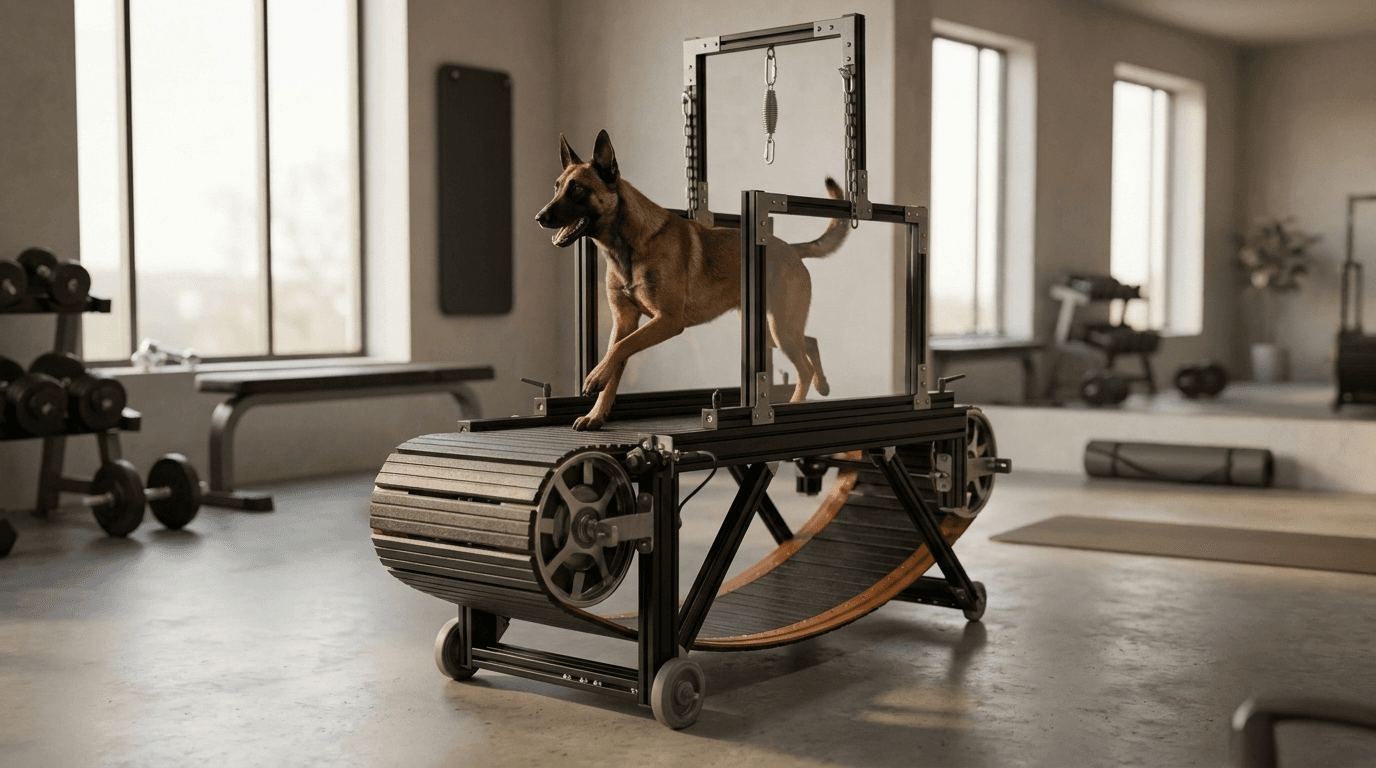
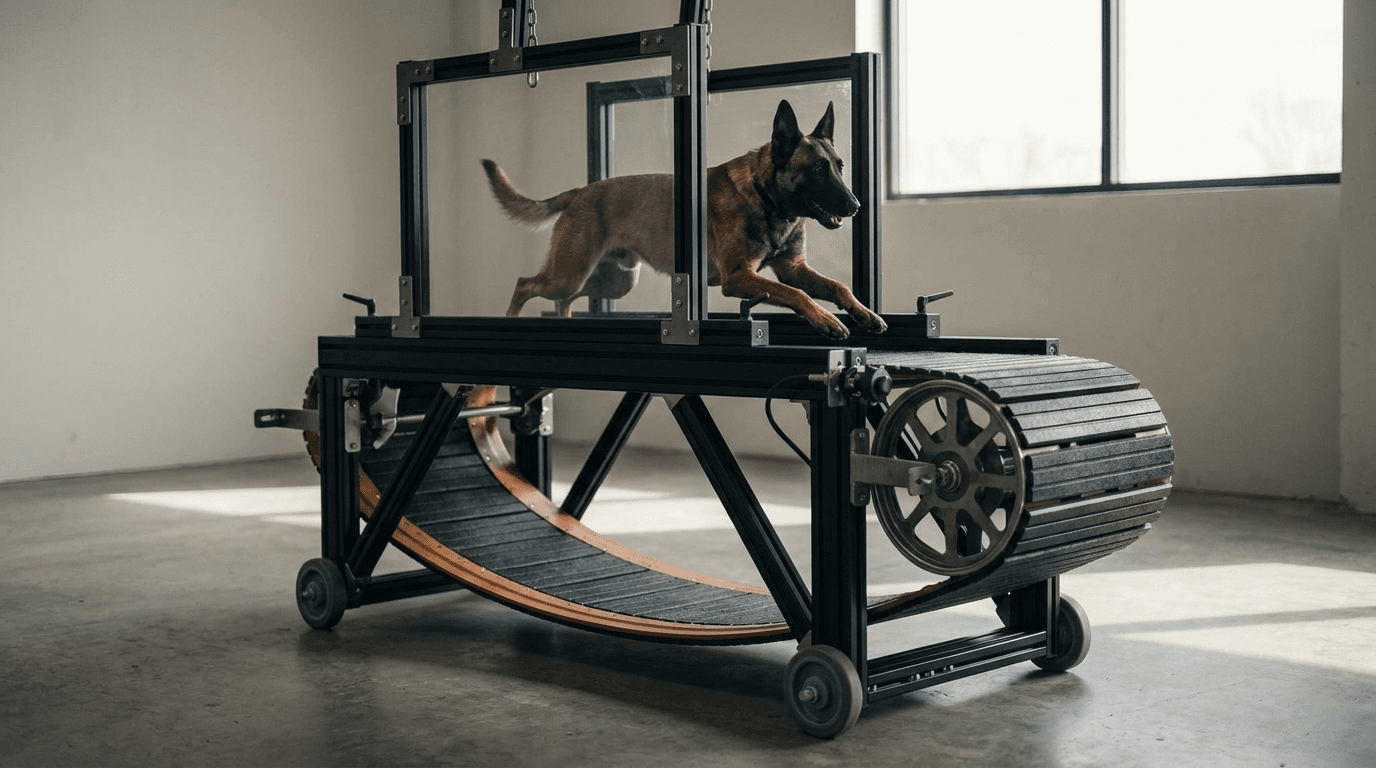
Slatmill (Self-Powered, Slat Belt)
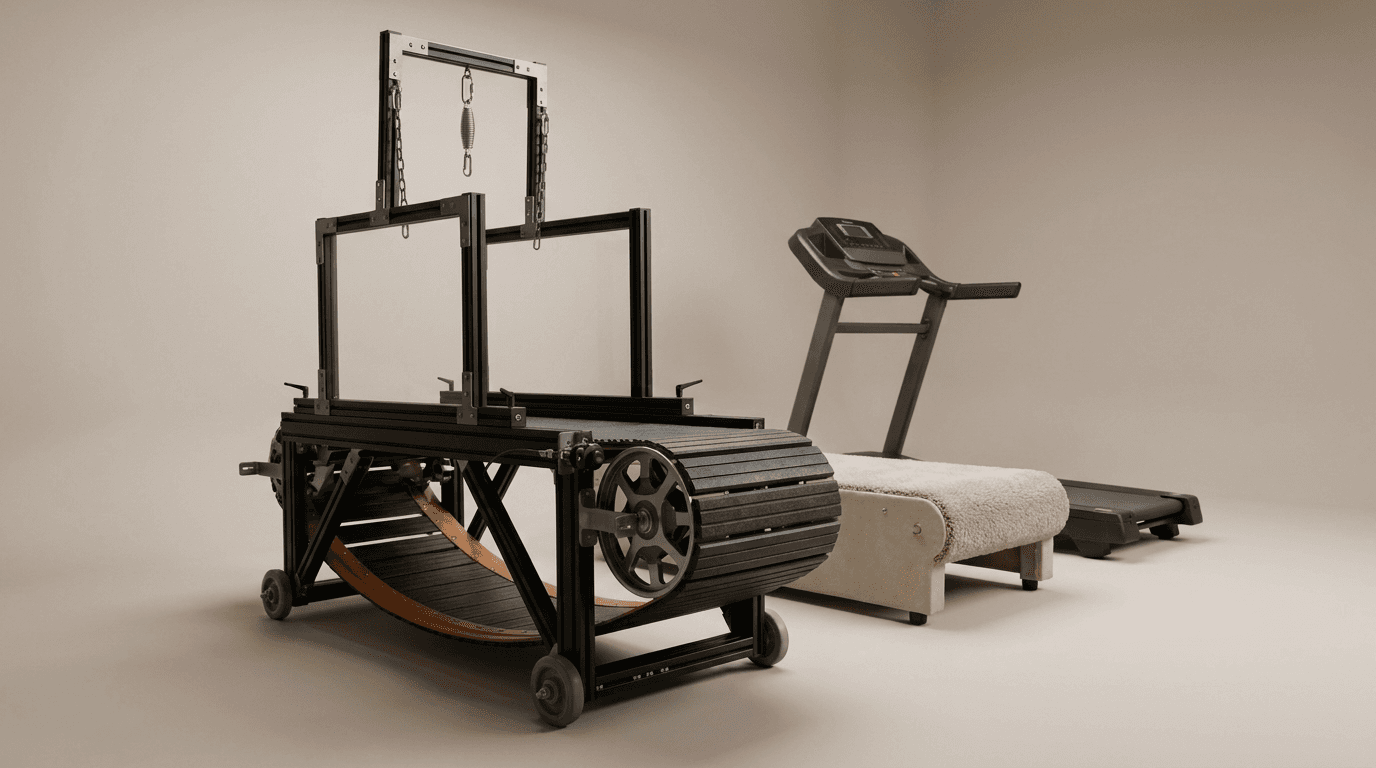
How it works: Individual slats rotate on rollers. Dog-powered — the belt only moves when the dog moves. Best for: High-energy breeds, athletic conditioning, daily exercise, safety-conscious owners Pros: Safest (dog controls speed), no electricity, builds muscle, lasts decades Cons: Largest footprint, highest price Price range: $1,000-$6,000Carpet Mill (Self-Powered, Carpet Belt)
How it works: A loop of carpet wraps around rollers. Dog-powered, but with 4-5x more resistance than a slatmill. Best for: Muscle building, strength training, power conditioning Pros: High resistance builds raw power, many fold for storage, lower price Cons: Carpet wears out, too much resistance for some dogs, not ideal for endurance Price range: $300-$1,500Electric (Motorized)
How it works: Motor drives the belt at a set speed. Owner controls the pace. Best for: Senior dogs, rehab, low-drive dogs, controlled pacing Pros: Quietest, most compact, preset programs Cons: Dog can't self-regulate speed (safety risk), motor can fail, needs electricity Price range: $300-$1,500Step 2: Size It Right
Running surface length: Should be at least 1.5x your dog's body length. A 30" long dog needs a minimum 45" belt. For a large dog (GSD, Lab, Rottie), look for 70"+ belts. Running surface width: Minimum 14" for medium dogs, 16"+ for large breeds. Weight capacity: Must exceed your dog's weight with margin. If your dog weighs 80 lbs, don't buy a treadmill rated for 80 lbs — get one rated for 120+. Overall footprint: Measure your space before buying. A large slatmill is roughly 76" x 20" — plus 2' on each side for clearance.Step 3: Check These Features
Must-Have
Nice-to-Have
Red Flags
Step 4: Consider Noise
If you're in an apartment or have close neighbors:
All are manageable indoors. A rubber mat underneath reduces vibration for all types.
Step 5: Think Long-Term
Lifespan:A slatmill costs more upfront but less over time.
Our Recommendation
For most dog owners buying their first (and hopefully only) dog treadmill:
Get a slatmill if your dog is medium to large, high-energy, and you want the safest, longest-lasting option. You'll pay more upfront but it will last a decade or more with zero ongoing costs. Get a carpet mill if your primary goal is building raw muscle and power, and you need something that folds for storage. Get an electric only if your dog is senior, in rehab, or very low-drive and needs controlled pacing. See the HoundPower Slatmill lineup →