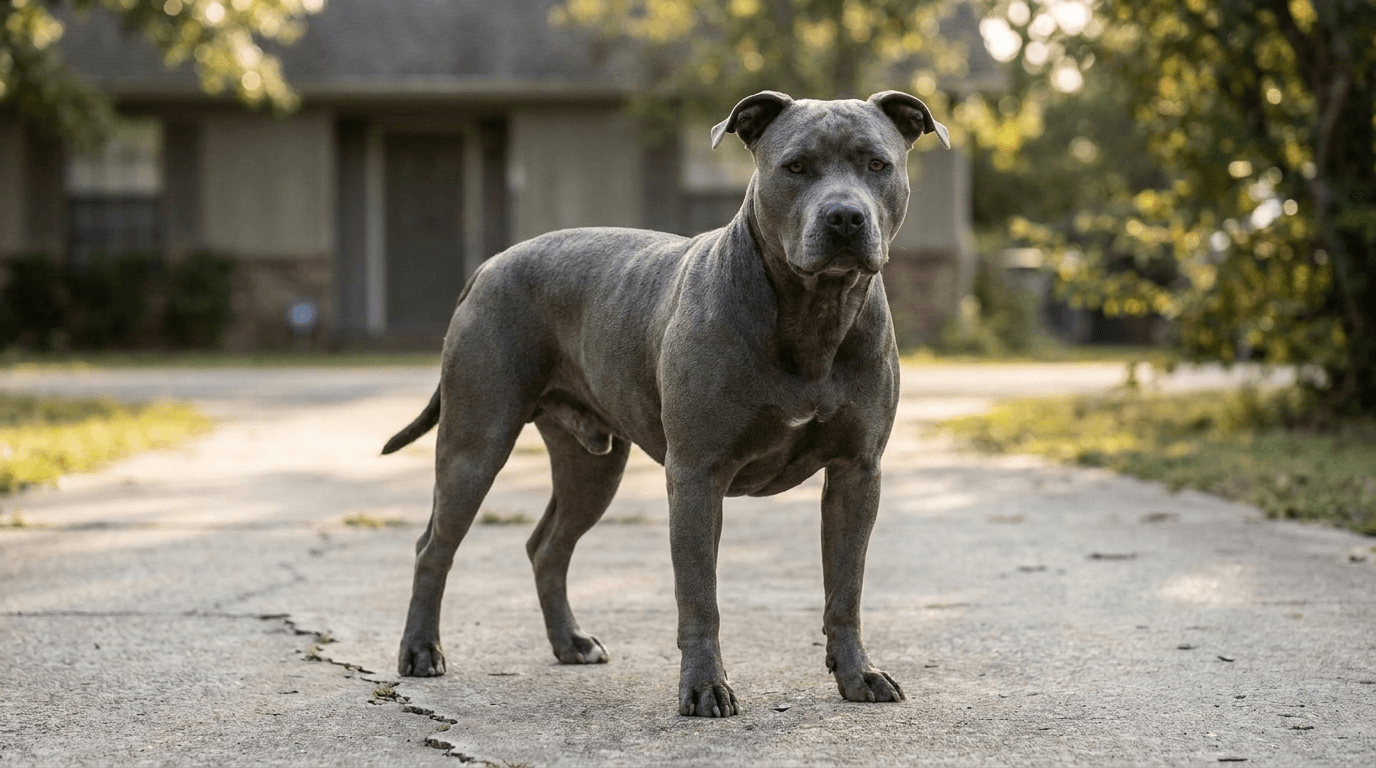
If you own a pitbull or American Bully, you already know: these dogs have energy. A lot of it. And if that energy doesn't go somewhere productive, it goes somewhere destructive.
Here's exactly how much exercise your pitbull needs, what happens when they don't get it, and the most effective way to deliver it.
Daily Exercise Requirements
Adult pitbulls and American Bullies need 1-2 hours of exercise per day, ideally split across 2-3 sessions. This should include a mix of:
High-energy pitbulls may need the full 2 hours. Calmer individuals might be satisfied with 30-45 minutes of vigorous activity plus a walk.
Puppies: 5-7 minutes per month of age, twice daily. A 4-month-old puppy needs about 20-minute sessions. No sustained running until growth plates close (12-18 months). Seniors: 30-45 minutes of gentle daily activity. Walks and light play.What Happens When Pitbulls Don't Get Enough Exercise
This is where it gets real. Without adequate exercise, a pitbull's natural energy turns into:
Pitbulls are especially prone to separation anxiety due to their strong owner bonds. Under-exercised dogs left alone exhibit pacing, whining, howling, and destruction.
This matters beyond your house. Behavioral issues from under-exercise are the leading reason pitbulls end up in shelters. A tired pitbull is a well-behaved pitbull.The 6 Best Exercises for Pitbulls
1. Slatmill Training
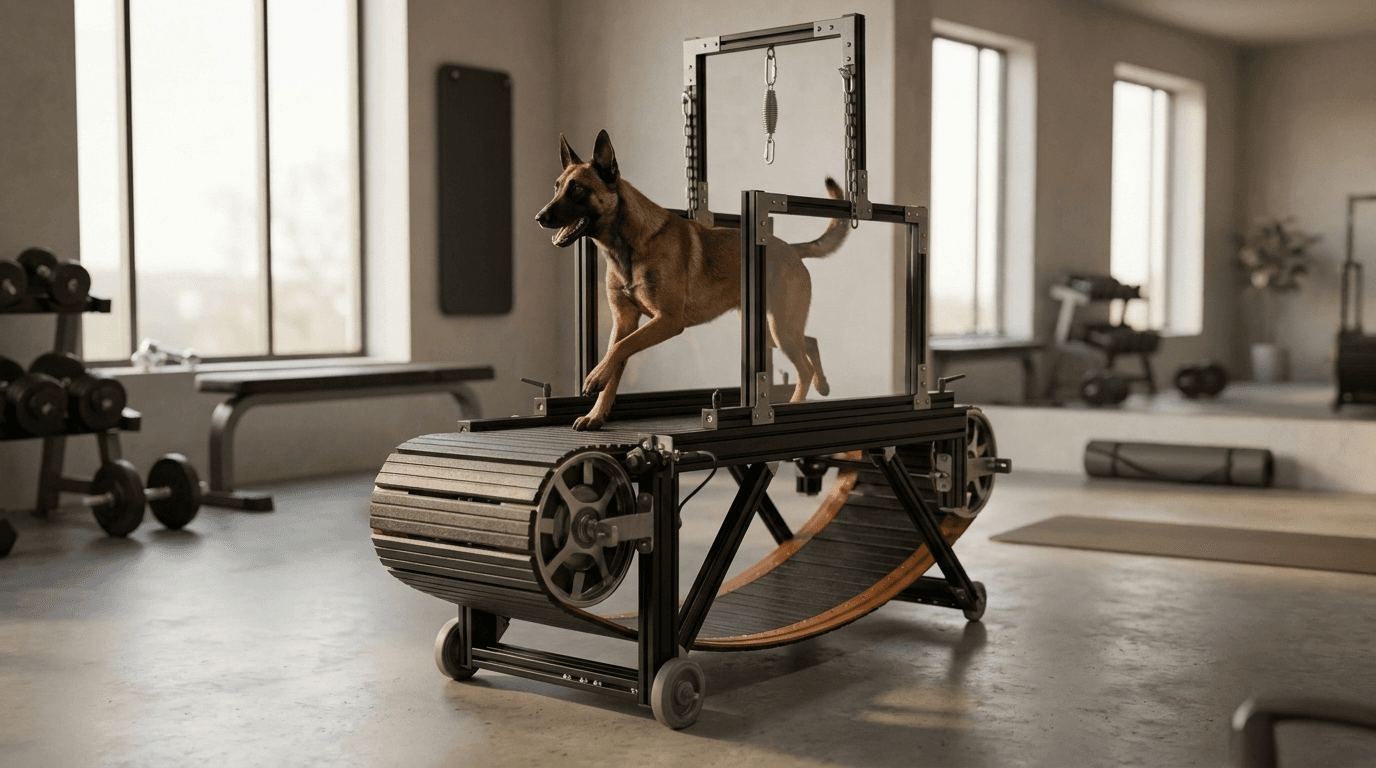
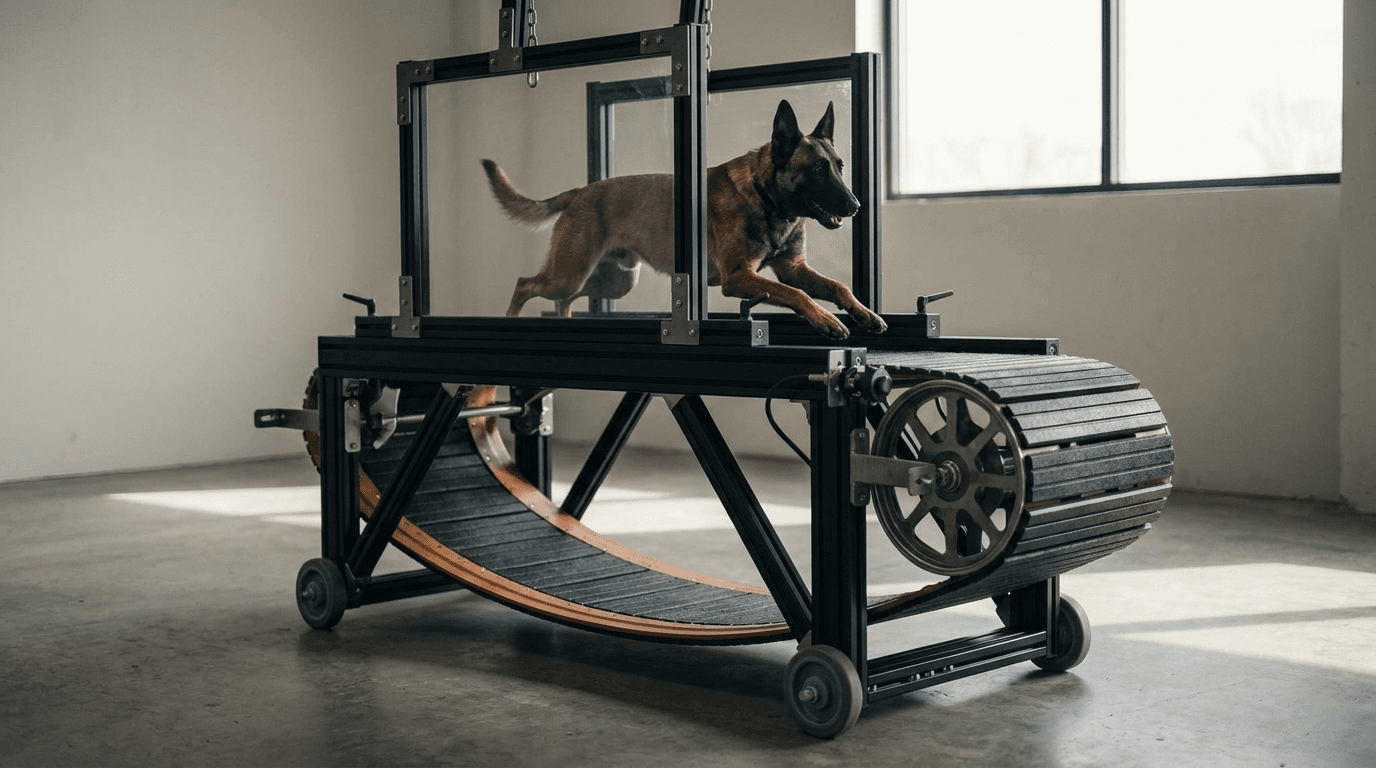
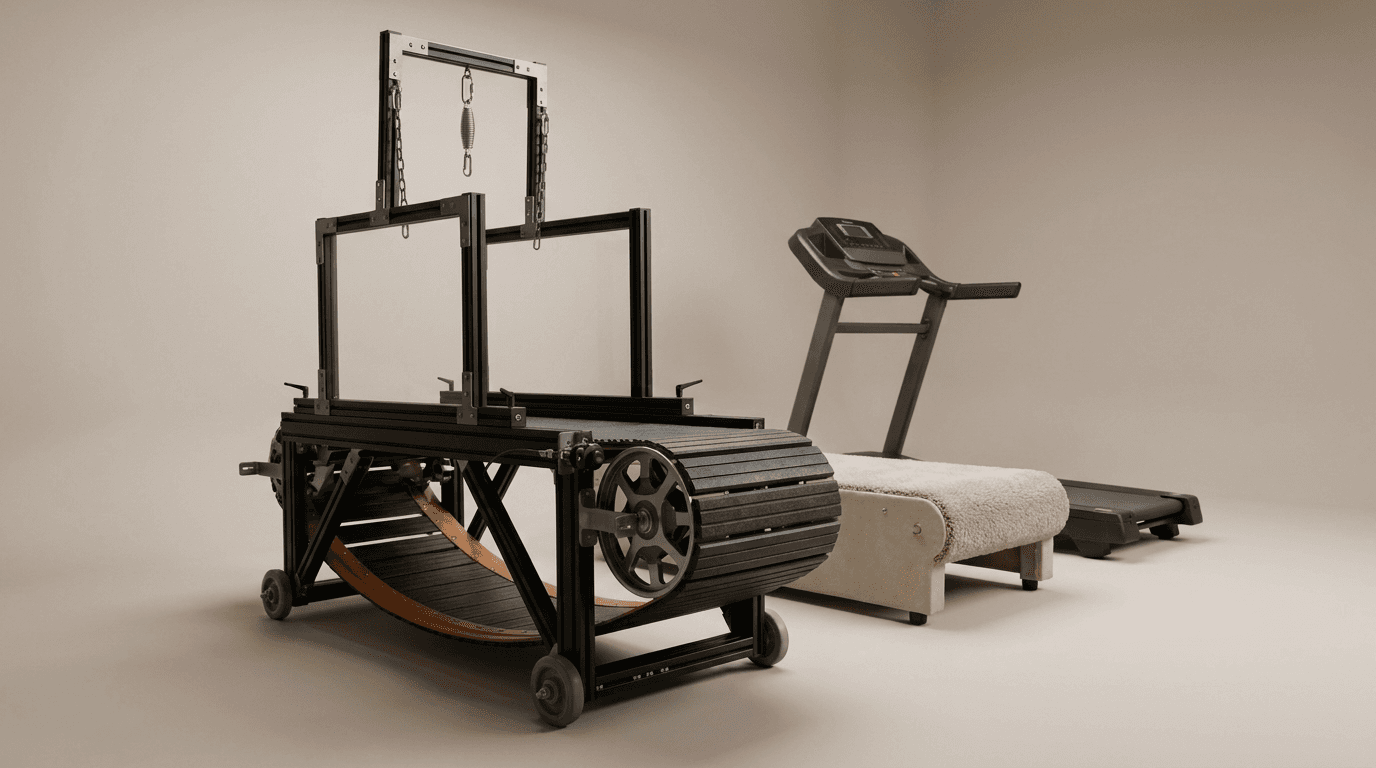
A dog-powered treadmill where your pitbull controls the pace. 5 minutes of slatmill sprinting can drain more energy than 60 minutes of walking. Builds lean muscle, burns massive energy, and works year-round regardless of weather. This is the #1 exercise tool for pitbull owners — and the breed most commonly associated with slatmill training worldwide.
2. Daily Walks / Runs
The foundation. 30-60 minutes of structured walking or jogging. Use a harness, not a collar — pitbulls pull, and collars put pressure on the trachea.
3. Swimming
Low-impact, full-body workout. Engages cardiovascular system and all major muscle groups without stressing joints. Ideal for pitbulls prone to musculoskeletal conditions.
4. Flirt Pole
A flexible stick with a tug toy on the end. Your pitbull chases, jumps, and grabs. High-intensity prey-drive workout that exhausts dogs in 10-15 minutes. Builds speed, agility, and leg strength.
5. Weight Pulling
The #1 resistance exercise for building lean muscle. Uses a specialized harness to pull a weighted sled or cart. Start light (10-20 meters) and consult a vet first. Pitbulls are naturally built for pulling.
6. Spring Pole / Tug-of-War
Builds jaw, neck, shoulder, and core strength. A spring pole is a suspended tug toy that lets your dog play tug independently. Great for solo exercise.
Why the Slatmill Is #1 for Pitbulls
Pitbulls and American Bullies are the most common slatmill breed — and for good reason:
Muscle building: Running on a slatmill is closer to running uphill than jogging on flat ground. The natural resistance from the belt engages quads, hamstrings, core, and stabilizer muscles more than pavement running. Joint protection: The slatted surface reduces repetitive impact compared to concrete and asphalt. This matters for a breed that's prone to hip dysplasia and ACL injuries. Energy efficiency: A 5-minute sprint session can drain more energy than a long outdoor walk. For a breed that needs 1-2 hours daily, this is a game-changer. Mental health: The repetitive, self-controlled motion releases endorphins. Dogs that use slatmills regularly are calmer, less anxious, and more focused. Year-round consistency: Rain, snow, heat — doesn't matter. Your pitbull gets a real workout every single day.Pitbull Slatmill Training Tips
1. Start with familiarization. Let your dog sniff and explore the slatmill freely. Never force this step — most introduction failures happen because owners rush it.
2. First sessions: 1-3 minutes. Walking pace only.
3. Build gradually. Add 1-2 minutes per session over the first two weeks.
4. Watch for overheating. Pitbulls can overheat quickly during intense exercise. Use a fan and enforce water breaks.
5. Use a harness. Never a collar. Always.
6. Positive reinforcement only. Treats and praise. The goal is for your dog to love the slatmill.
7. Vet check first — especially for puppies under 18 months or dogs with health conditions.
The Bottom Line
Pitbulls aren't hard dogs. They're high-energy dogs that need proper outlets. Give them 1-2 hours of real exercise daily — with a slatmill as the backbone — and you'll have the calmest, most well-behaved pitbull on the block.
See HoundPower Slatmills — the #1 choice for pitbull owners →