Your dog is reactive. Every walk is a battle — lunging at other dogs, barking at strangers, pulling toward squirrels. It's stressful for both of you. And the worst part: your dog still needs exercise. Under-exercising a reactive dog makes the reactivity worse.
Here's how to give your reactive dog a real workout without the triggers.
Why Exercise Matters More for Reactive Dogs
Reactivity is often fueled by pent-up energy. A dog with a full gas tank has a lower threshold for triggers — everything sets them off faster and harder. A dog that's physically drained has a higher threshold. Same triggers, calmer response.
This doesn't fix reactivity on its own. But it creates the conditions where behavior modification training can actually work.
Cornell Vet recommends: rule out medical causes first. Sudden reactivity can signal pain. Once cleared, build an exercise-first routine.
The Indoor Exercise Toolkit
1. Slatmill (Primary Tool)
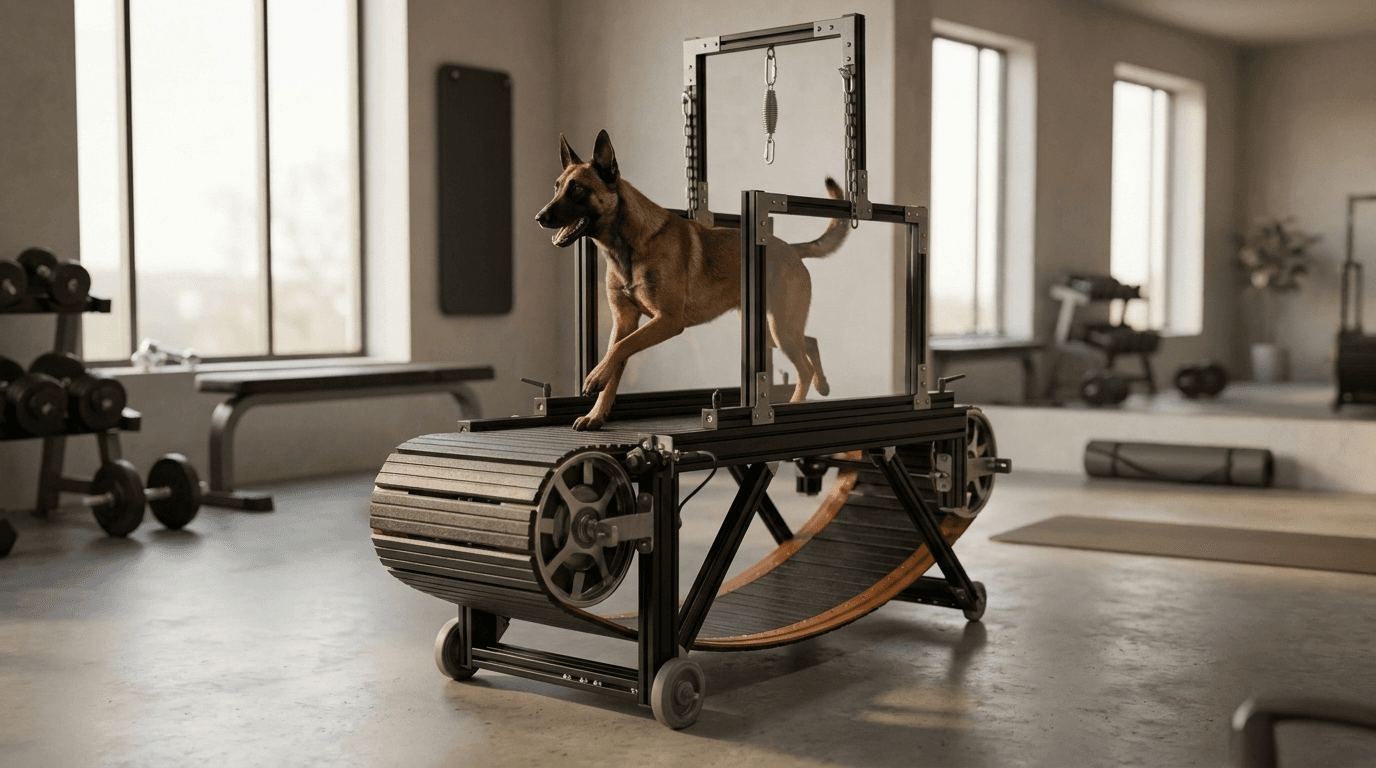
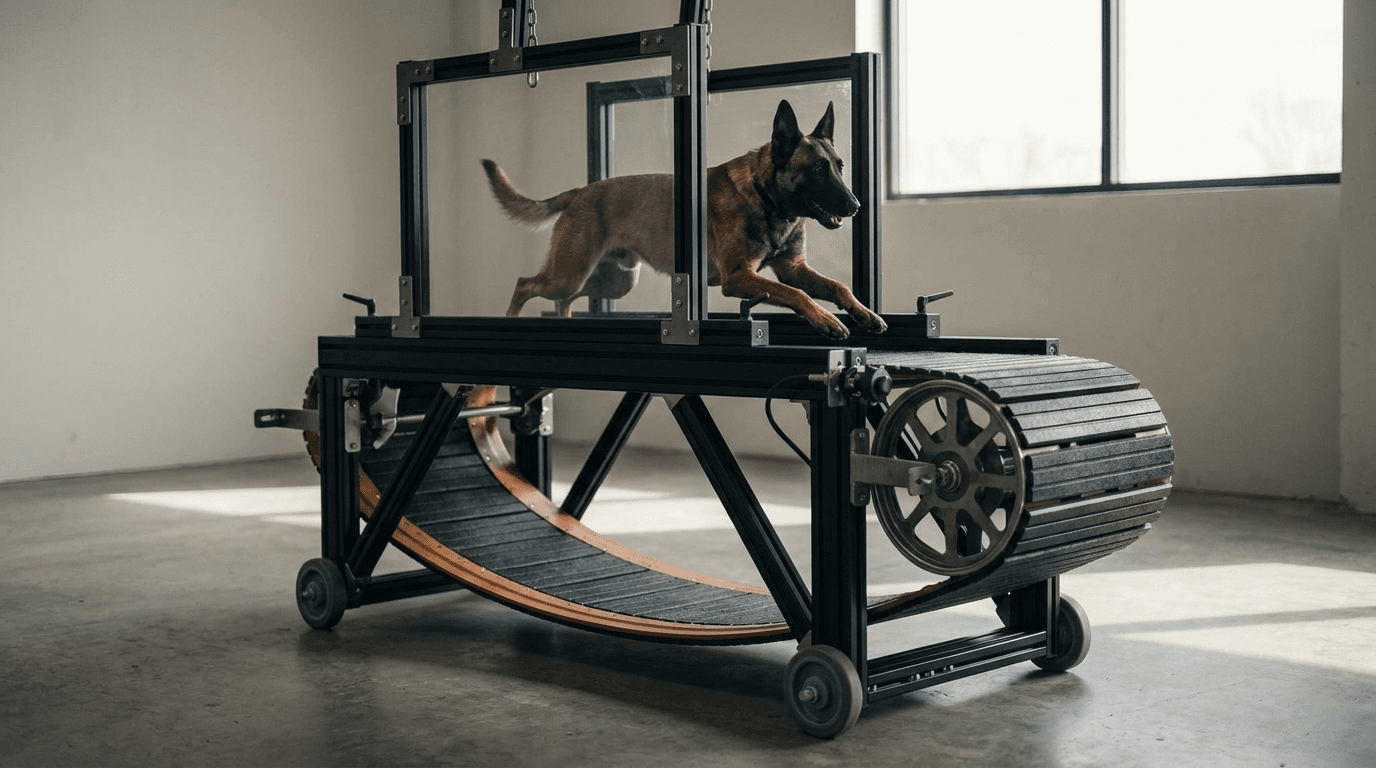
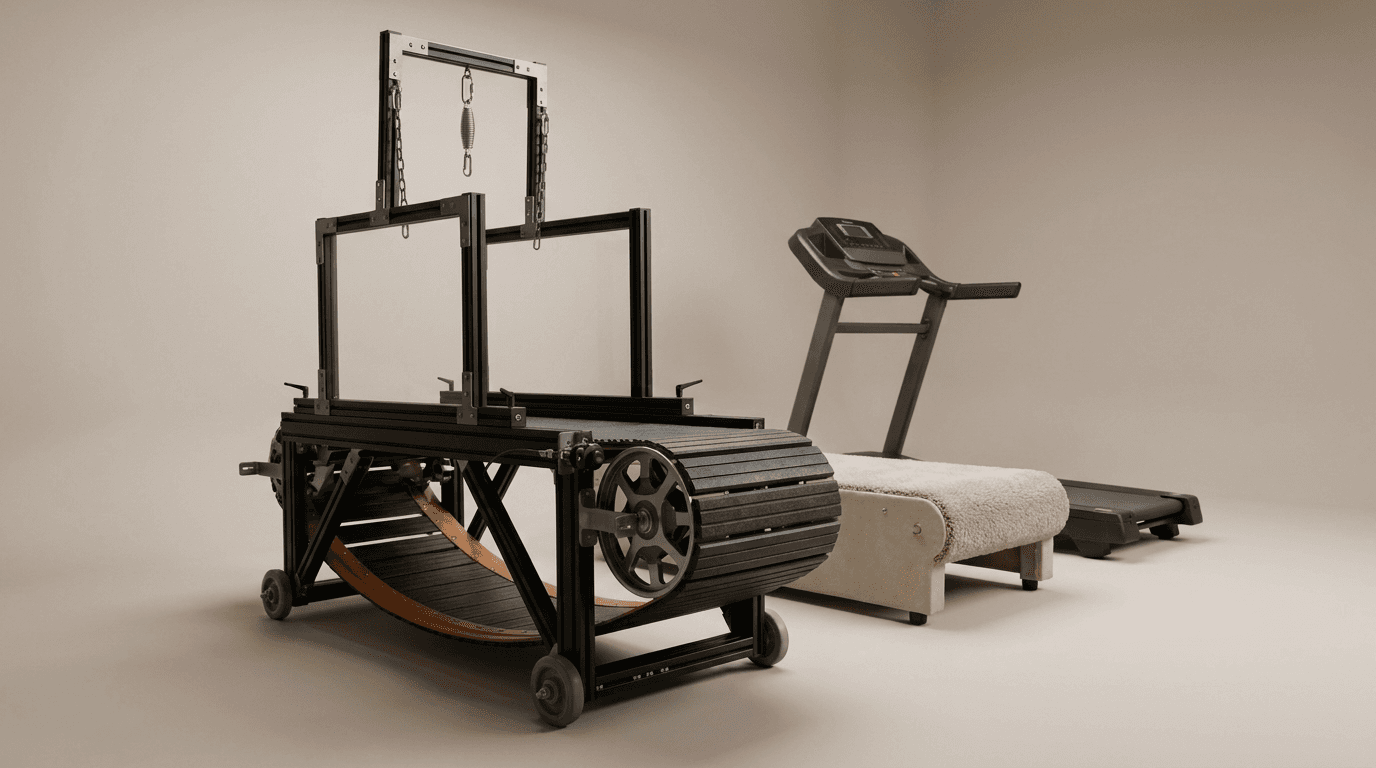
A dog-powered treadmill that lets your dog sprint, trot, or walk at their own pace — indoors, with zero triggers. No other dogs. No strangers. No unpredictable stimuli. Just your dog and the belt.
For reactive dogs, this is the highest-value tool because it delivers intense physical exercise in a completely controlled environment. 5-20 minutes per session.
2. Flirt Pole
A chase-and-grab game that engages prey drive. Works in a living room or basement. 10 minutes of flirt pole work exhausts most dogs. Builds impulse control when you add "wait" and "drop" commands.
3. Tug-of-War
Builds physical strength and focuses energy into a structured game with rules. Start and stop on your terms. Teaches the dog to engage and disengage — a skill reactive dogs desperately need.
4. Scent Work / Nose Games
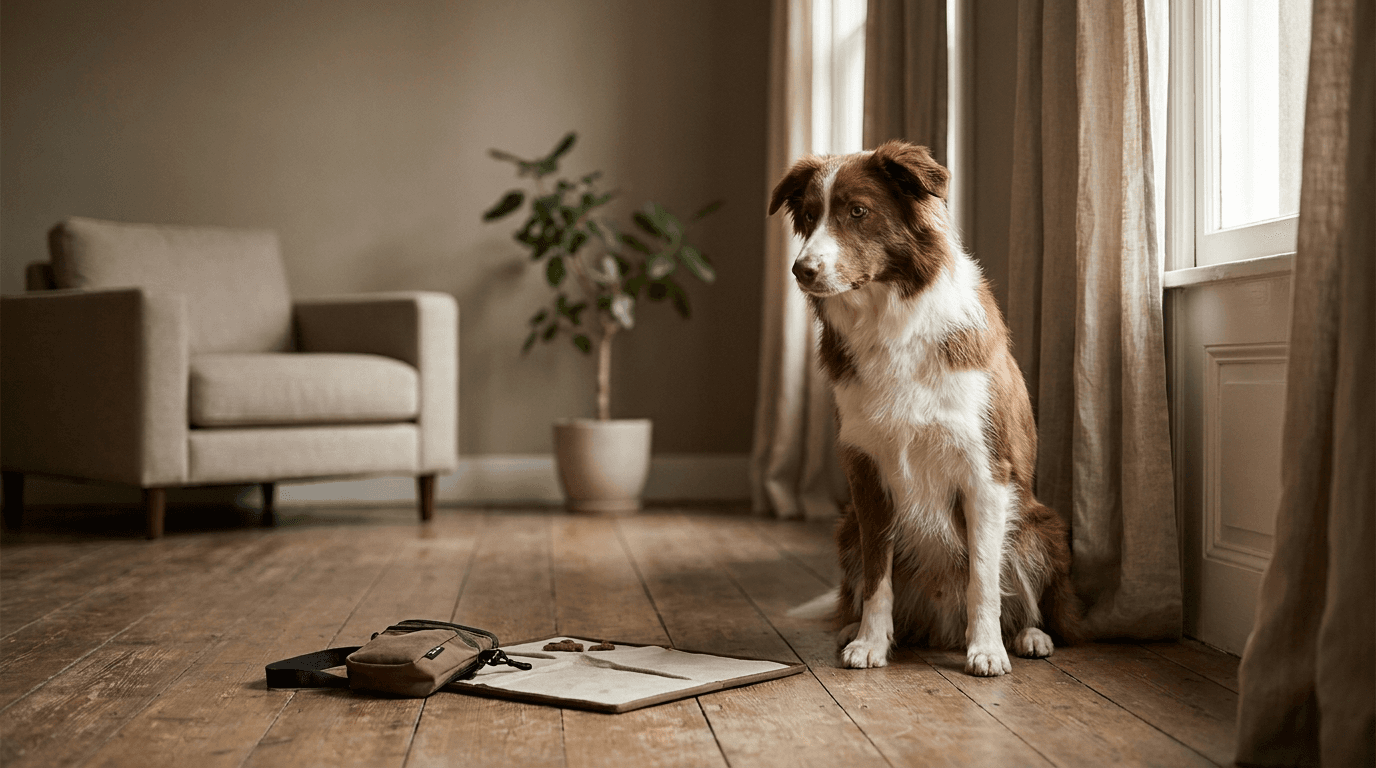
Mental exercise is as tiring as physical exercise. Hide treats around the house, use snuffle mats, or play "find it" with a favorite toy. Engages the dog's brain in a calming, focused activity.
5. Obedience Training Sessions
5-10 minute sessions using kibble as rewards. New tricks, duration stays, distance recalls. The mental concentration drains energy fast.
6. Indoor Agility
DIY with household items: jump over broomsticks, weave through chair legs, crawl under tables. Combines physical movement with problem-solving.
The Reactive Dog Daily Routine
Morning (before triggers are likely):This routine provides 40-50 minutes of structured exercise without a single trigger exposure.
The Bigger Picture
Indoor exercise doesn't replace behavior modification. Your reactive dog still needs desensitization and counter-conditioning work with a qualified trainer. But trying to train a reactive dog that's bursting with pent-up energy is like trying to teach algebra to someone who hasn't slept in 48 hours.
Exercise first. Training works better on a tired dog.
The Bottom Line
A reactive dog needs more exercise, not less. And they need it in an environment that doesn't trigger the exact behaviors you're trying to fix. A slatmill + indoor enrichment gives your reactive dog what they need while keeping everyone calm.
See HoundPower Slatmills — exercise without the triggers →