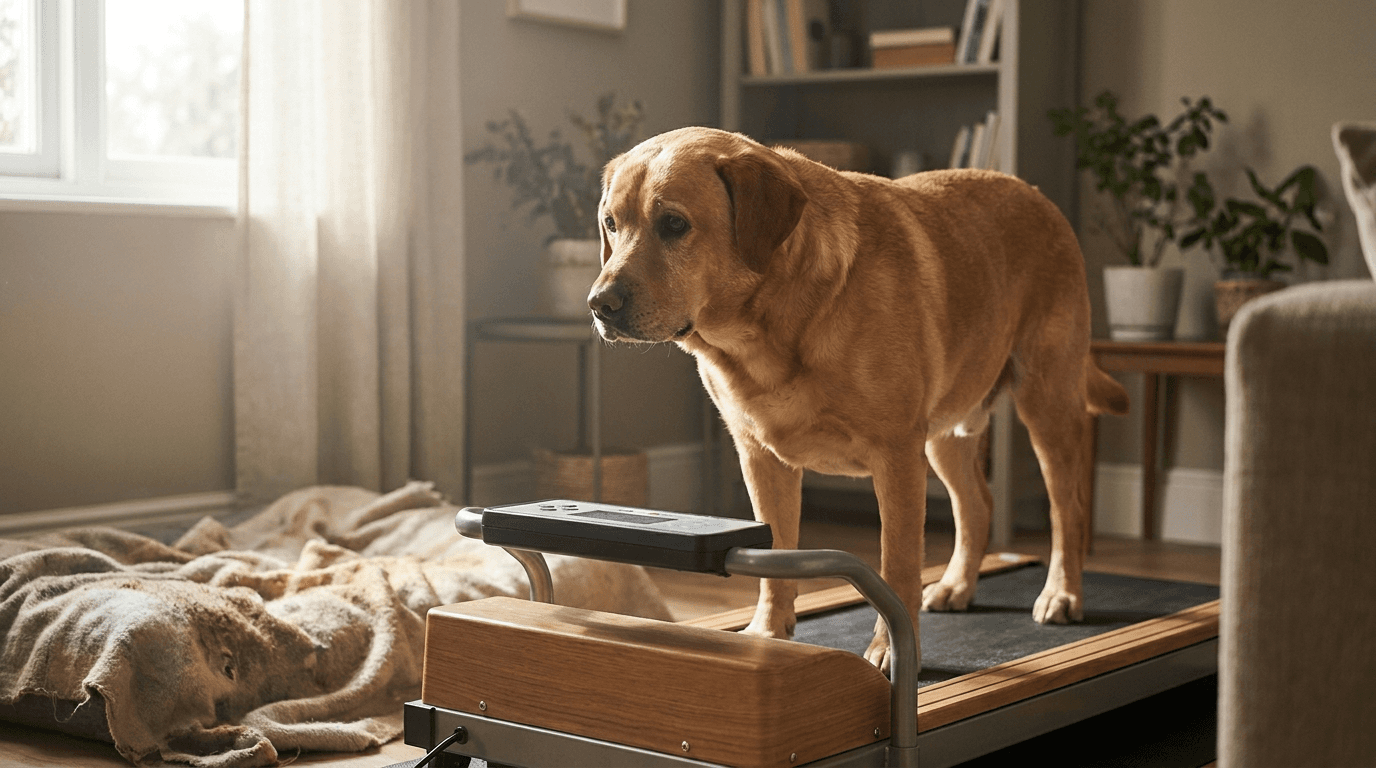
59% of US dogs are classified as overweight or obese. Only 35% of owners even recognize the problem. And of those who try weight loss, only 1 in 4 succeed long-term.
The formula is simple: exercise + diet. But execution matters. Here's a safe, progressive plan.
Step 1: Vet Check First
Before starting any exercise program for an overweight dog, get a vet assessment. You need to rule out thyroid issues, joint problems, and other conditions that affect both the cause and the safe approach to weight loss.
Your vet will set a target weight and a safe rate of loss: 1-3% of body weight per month. Faster than that risks muscle loss.
Step 2: Diet (Exercise Alone Isn't Enough)
Exercise without diet change rarely works. The basics:
•Measure every meal. No eyeballing. Use a kitchen scale.
•Cut treats by 50%. Or switch to low-calorie treats (carrots, ice cubes, green beans).
•Consider a therapeutic weight-loss diet — only 22% of owners use one, but they work significantly better than just feeding less of regular food.
•Feed 2-3 smaller meals instead of 1 large one. Keeps metabolism active.
Step 3: The Exercise Plan
Weeks 1-2: Foundation
•5-10 minutes walking per session, 2x daily
•Flat ground only. No hills, no running.
•Pace: slow to moderate. Let the dog set the speed.
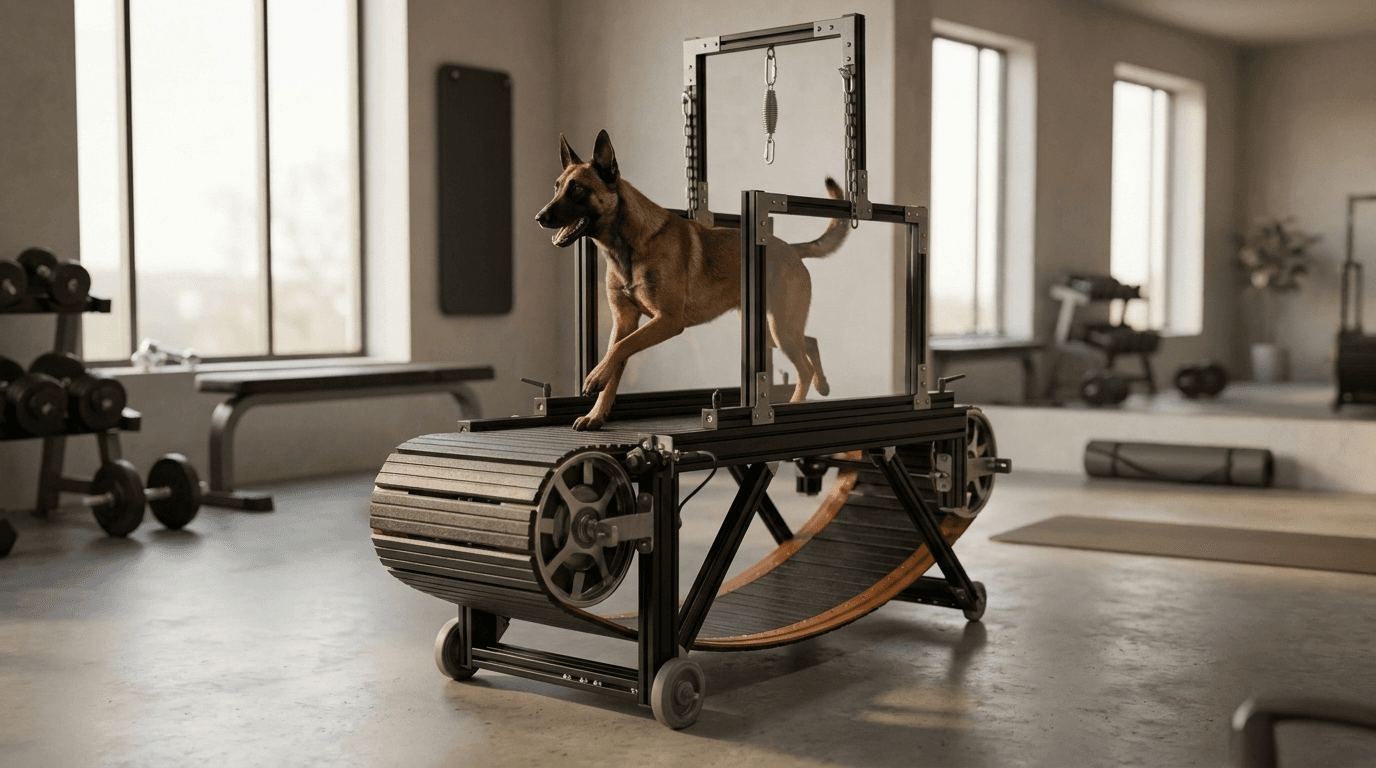
•If using a slatmill: 3-5 minutes at walking pace, 3x per week
The goal isn't fitness — it's getting an inactive dog moving without injury.
Weeks 3-4: Building
•10-15 minutes per session, 2x daily
•Introduce gentle inclines or slightly faster pace
•Slatmill: 5-8 minutes, 3-4x per week
•Add 1-2 minutes per session each week
Weeks 5-8: Progression
•15-20 minutes per session, 2x daily
•Mix walking and light trotting
•Slatmill: 10-15 minutes with walk/trot intervals, 3-4x per week
•Swimming if available — ideal low-impact option for overweight dogs
Weeks 9-12: Conditioning
•20-30 minutes per session, 1-2x daily
•Moderate intensity — sustained trotting is the goal
•Slatmill: 15-20 minutes, 4x per week
•Recheck weight with vet at week 12
Why a Slatmill Works for Overweight Dogs
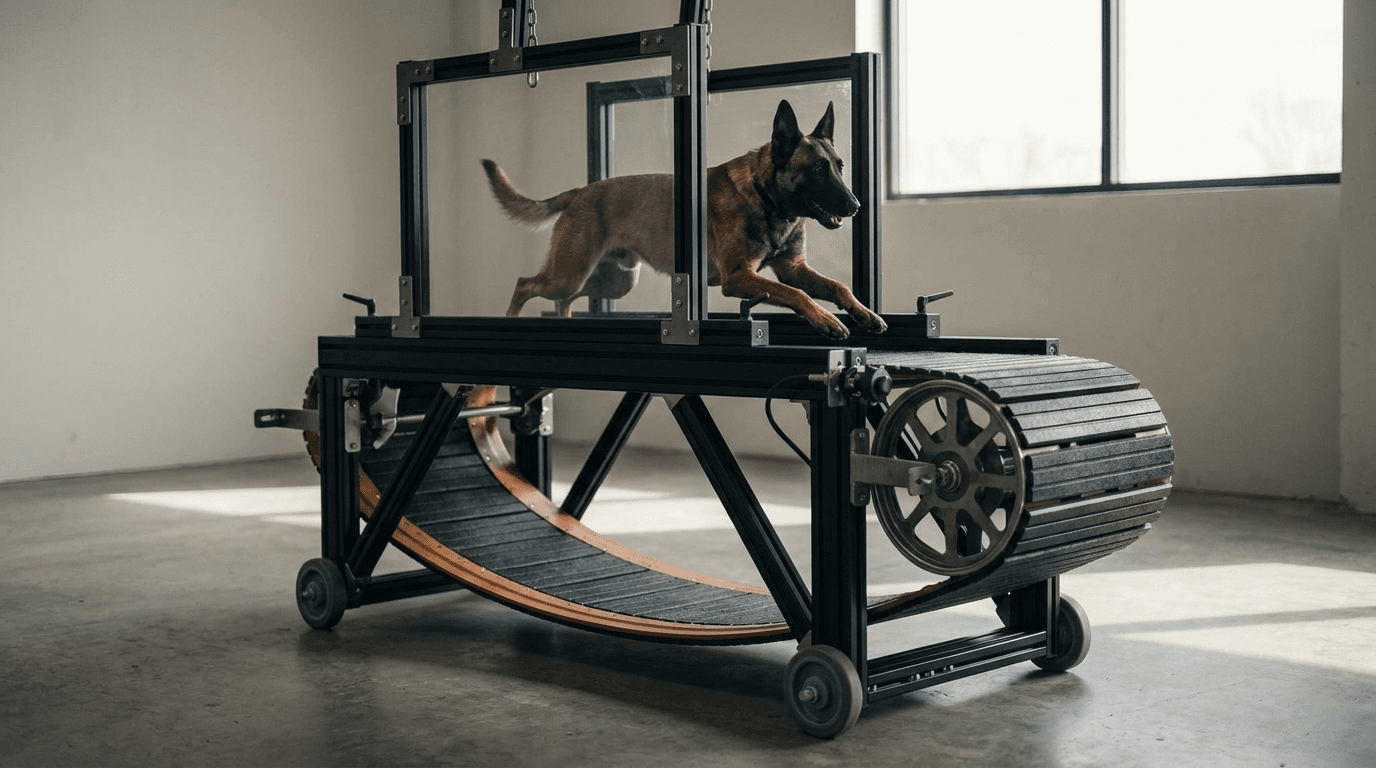
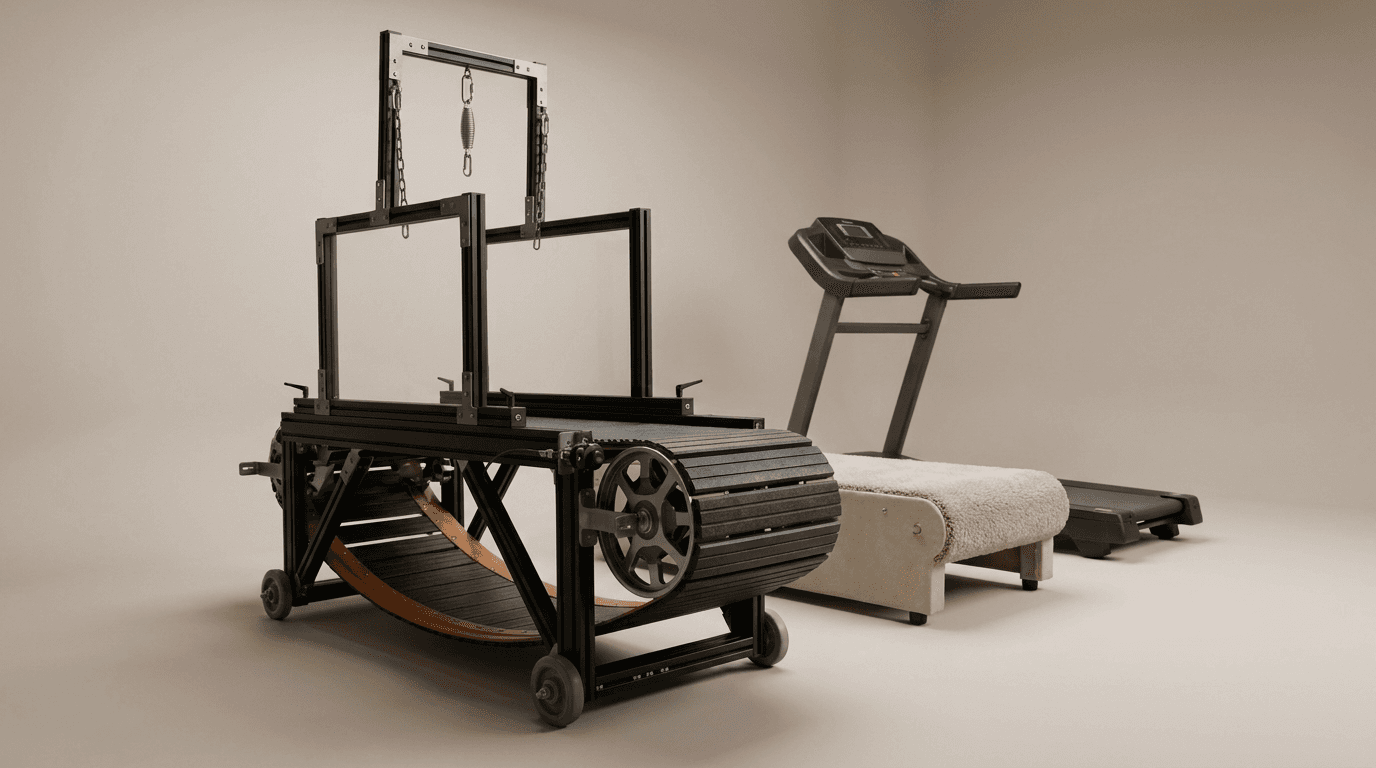
•Self-paced — the dog controls the speed. No forced running that could injure joints already stressed by excess weight.
•Low-impact surface — shock-absorbing slats are gentler than concrete.
•Controlled sessions — you know exactly how long they exercised, every time.
•Progressive overload — easy to add 1-2 minutes per week systematically.
•Indoor — no weather excuses. Consistency is what drives weight loss.
What to Avoid
•Don't start with running. Overweight joints can't handle impact. Walk first, for weeks.
•Don't over-exercise. More isn't better. Gradual progression prevents injury.
•Don't rely on exercise alone. Diet is 70% of the equation.
•Don't ignore panting/limping. Stop and rest. Overweight dogs overheat faster.
Track Progress
Weigh monthly (not weekly — daily fluctuations are misleading). Take photos from the same angle monthly. You should see:
•Visible waist from above by week 8-12
•Ribs palpable (not visible) under a thin fat layer
•Increased energy and willingness to exercise
•Better sleep patterns
The Bottom Line
Dog obesity is the #1 preventable health issue in pets. The fix is consistent exercise + measured diet. A slatmill makes the exercise half predictable, progressive, and safe for joints that are already under stress.
See HoundPower Slatmills →Ready to Get Started?
The HoundPower Slatmill is built for serious dog owners. Free shipping in Canada.
Shop Slatmills