
FOUNDING-MEMBER PRICING — Save Up To $1,000
All Posts
Health7 min read2026-04-29

The Link Between Exercise and Dog Aggression (What Science Says)

The Link Between Exercise and Dog Aggression (What Science Says)

Aggression is the #1 reason dogs are surrendered to shelters and the #1 reason owners seek behavioral help. But aggression is a symptom, not a diagnosis. And in many cases, the underlying cause is simpler than people think: not enough exercise.

What the Science Says

Multiple studies have established the connection:

  • Under-exercised dogs show higher cortisol levels. Cortisol is the stress hormone. Chronically elevated cortisol lowers the threshold for reactive and aggressive responses — everything becomes a trigger.
  • Exercise triggers endorphin and serotonin release. These neurochemicals promote calm, reduce anxiety, and raise the threshold for aggression. A dog that ran hard this morning needs a much bigger trigger to react aggressively than a dog that hasn't moved.
  • Frustration-based aggression is directly linked to insufficient physical outlet. A dog with pent-up energy redirects that energy into aggressive behavior — lunging, snapping, barrier frustration.
  • Veterinary behaviorists commonly prescribe structured exercise as the first intervention before medication or intensive behavior modification.

    The Types of Aggression Exercise Helps

    Frustration Aggression

    The dog is frustrated by confinement, boredom, or inability to reach something they want. This is the most directly exercise-related form. A tired dog has dramatically less frustration.

    Leash Reactivity

    Dogs that lunge, bark, and snap on leash are often over-aroused and under-exercised. Exercising before walks lowers their baseline arousal, reducing reactive outbursts.

    Barrier Aggression

    Fence running, window charging, door dashing. The dog is aroused by stimuli they can see but can't reach. Physical exhaustion reduces the drive to react.

    Territorial Aggression

    While territorial behavior has genetic components, under-exercised dogs guard more intensely because their overall stress level is higher.

    What Exercise Doesn't Fix

    Exercise is not a cure-all. It won't fix:

  • Fear-based aggression — caused by trauma, poor socialization, or genetic temperament. Needs professional behavioral work.
  • Pain-induced aggression — caused by an underlying medical condition. Needs a vet.
  • Predatory aggression — hardwired prey drive. Needs management, not just exercise.
  • Aggression that's been reinforced for years. Needs behavior modification alongside exercise.
  • Exercise creates the conditions for behavior modification to work. It's the foundation, not the entire solution.

    How Much Exercise Reduces Aggression?

    There's no magic number, but research and behaviorist recommendations converge on:

  • Minimum 60 minutes of vigorous daily exercise for breeds showing aggression-related behaviors
  • Morning exercise is most impactful — sets the behavioral tone for the whole day
  • Consistency matters more than intensity — daily moderate exercise beats sporadic intense sessions
  • Mental stimulation compounds the effect — combine physical exercise with puzzle feeders, training, and scent work
  • Why a Slatmill Works for Aggressive/Reactive Dogs

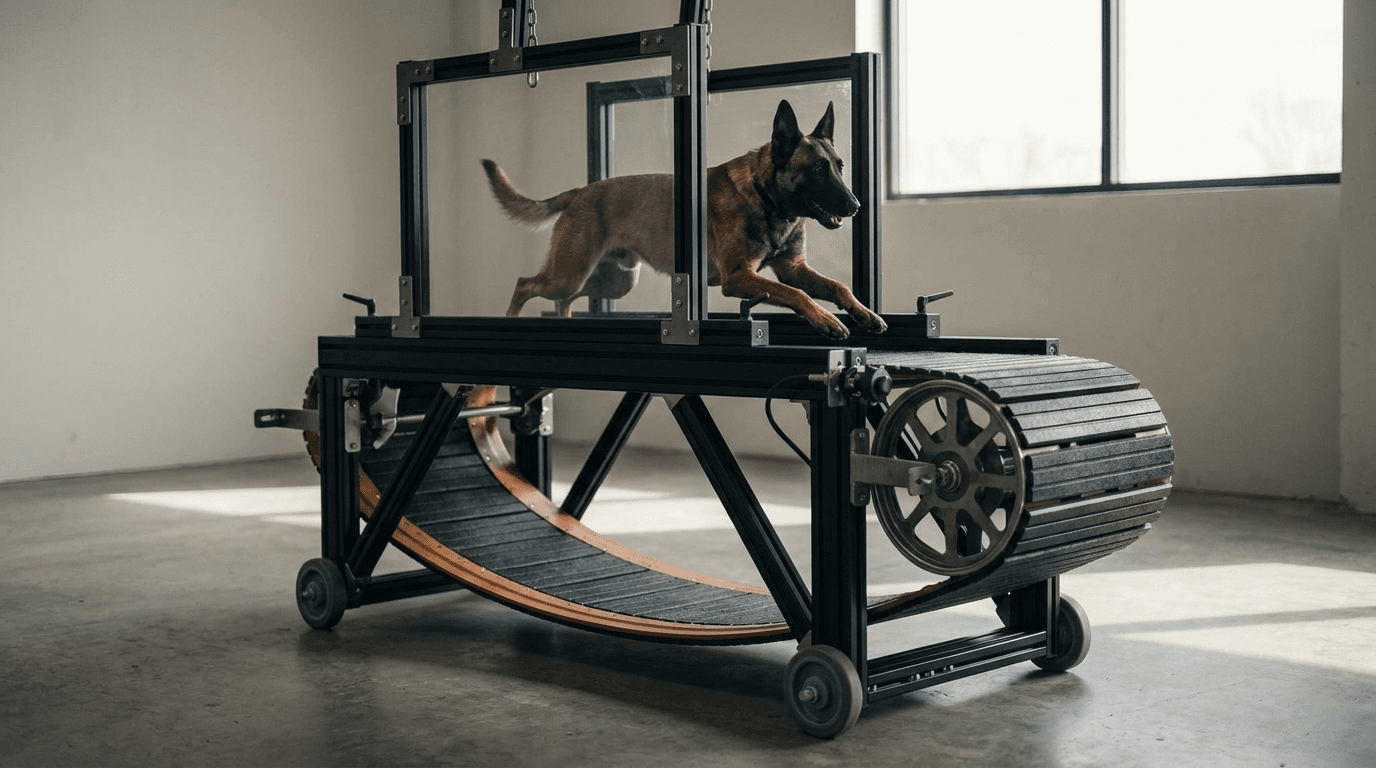
    This is where a slatmill becomes uniquely valuable:

  • No triggers. Indoor, controlled environment. No other dogs, no strangers, no environmental stimuli that provoke aggression.
  • Intense energy burn. 5 minutes of sprinting can drain a high-drive dog more than an hour-long walk. For dogs that are dangerous on walks, this is critical.
  • Pre-walk protocol. Run the dog on the slatmill before a leash walk. They go outside with a lower arousal baseline, reducing the chance of reactive episodes.
  • Consistent daily routine. The predictability of a daily slatmill session is itself calming for anxious, aggressive dogs.
  • Safe for the handler. You're not managing a reactive dog in public while trying to exercise them. The slatmill separates exercise from trigger exposure.
  • The Protocol for Aggressive Dogs

    1. Vet check first. Rule out pain, thyroid issues, and neurological problems.

    2. Morning slatmill session: 10-20 minutes of vigorous exercise before anything else.

    3. Mental enrichment midday: Puzzle feeder, scent work, training session.

    4. Evening walk: After the morning slatmill drain, the walk is calmer. Choose low-stimulation routes.

    5. Track behavior: Note reactive incidents. As exercise increases, incidents should decrease. This data helps your vet or behaviorist adjust the plan.

    The Bottom Line

    Exercise won't cure aggression. But under-exercise causes and amplifies it. A structured daily exercise routine — with a slatmill as the physical foundation — is the first step any behaviorist will recommend.

    See HoundPower Slatmills →

    Ready to Get Started?

    The HoundPower Slatmill is built for serious dog owners. Free shipping in Canada.

    Shop Slatmills